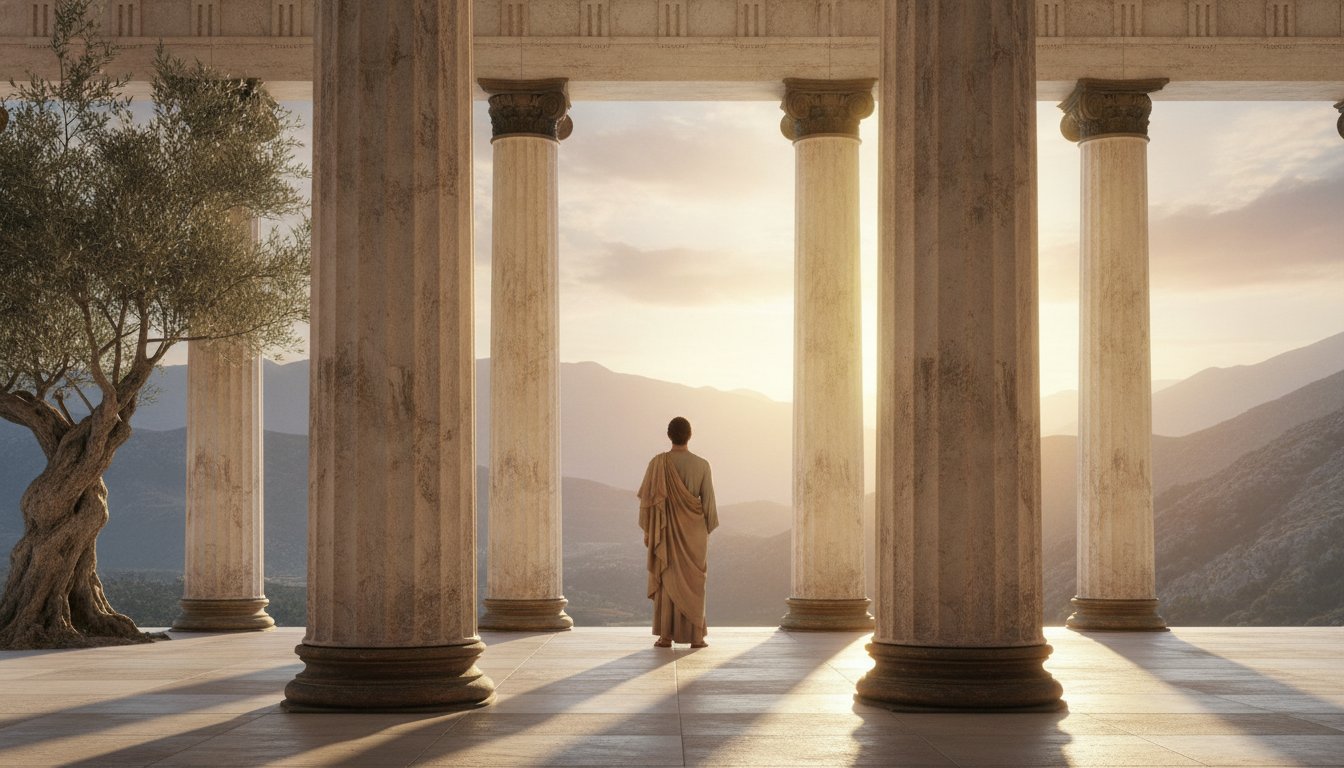
What if the noise of the digital age isn't a modern curse, but a timeless test of your internal architecture? You likely feel the pull of constant distraction and the heavy weight of things you simply cannot control. It's a common struggle in 2026, yet the solution was carved into the stone of the Stoa Poikile over two millennia ago. By having the stoic virtues explained through a modern lens, you can begin to build a sanctuary within yourself. This isn't about being cold. It's about finding a steady, grounded authority over your own mind.
You've probably noticed that chasing external success often leaves you feeling more hollow than when you started. We agree that a life without a clear internal compass feels like drifting at sea. This article promises to help you transform ancient wisdom into a practical operating system for resilience and clarity. We will walk through the four pillars of character that have supported the wise for centuries, examine how Marcus Aurelius maintained his poise, and provide you with disciplined exercises to reclaim your focus. Prepare to step into a gymnasium for the soul.
Key Takeaways
- Travel back to Zeno’s Painted Porch. Trace the lineage of a philosophy designed for the battlefield of daily life rather than the quiet of a library.
- Observe the lives of Marcus Aurelius, Seneca, and Epictetus. See how a king, an advisor, and a slave refined a singular discipline of the soul.
- Move beyond the noise of modern productivity hacks. Have the core stoic virtues explained as the only true good in an unpredictable world.
- Practice the premeditation of evils. Build your inner citadel using exercises that turn future shocks into present clarity and strength.
- Bridge the gap between theory and action. Use the to transform ancient wisdom into a modern operating system for resilience.
Table of Contents
- The Ancient Porch in a Digital Age: What is Stoicism?
- The Big Three: Marcus Aurelius, Seneca, and Epictetus
- Beyond Life-Hacks: Reclaiming Stoicism as a Moral Philosophy
- Stoic Training Exercises for the Modern Mind
- Building Your Inner Citadel: The Virtue Guide
The Ancient Porch in a Digital Age: What is Stoicism?
Zeno of Citium stood on the shore, his cargo lost to the depths. A merchant by trade, he watched his wealth vanish beneath the waves. He didn't despair. He walked into a bookstore in Athens, picked up a text about Socrates, and asked where such men could be found today. This moment of total loss became the catalyst for a philosophy that would endure for 2,300 years. Stoicism isn't a dry academic theory. It's a practical operating system for character. At its heart, having the What is Stoicism? explained through its daily application reveals a focus on what we can control. The goal is Eudaimonia. This isn't just happiness; it's the flourishing that comes from living in accordance with nature and reason.
The early Stoics didn't hide in ivory towers. They gathered at the Stoa Poikile, the "Painted Porch" in the heart of the Athenian marketplace. This choice was intentional. Philosophy belonged to the people. It belonged to the merchant, the soldier, and the citizen. By having the stoic virtues explained in public, they demonstrated that wisdom is a tool for the street, not just the study. They transformed the marketplace into a gymnasium for the soul. They proved that internal fortitude is built in the presence of others, not in isolation.
This tradition of making deep insights accessible continues today through practical resources like Dr. Grant Johnson - Common Sense Psychology for Everyday Living, which provides story-driven guidance for navigating the complexities of modern existence.
Why Stoicism Matters Today
The chaos of ancient Rome or Athens isn't so different from our own. They faced political upheaval and plague. We face digital overwhelm and the fragmentation of attention. Think of philosophy as a medical art for the mind. It provides the antibodies for anxiety. Whether you're a modern executive or a student, these principles offer a steady center. For those looking to bring high-level insights into their professional networks, you can explore Business Thought Leader Speakers who specialize in resilience and ethical leadership. They teach you to distinguish between your own judgments and external events. You learn to build an inner citadel. This structure remains standing even when the world outside feels like it's burning. It's a serious pursuit of internal development.
The Story of the Stoa
The school evolved through three distinct phases. The Early Stoa, led by Zeno and Chrysippus, built the logical and physical foundations. The Middle Stoa expanded into the Roman world, where it met the practical needs of a growing empire. Finally, the Late Stoa gave us the voices we know best: Seneca, Epictetus, and Marcus Aurelius. Each era refined the core mission we continue today. At StoicOs.ai, we see ourselves as the next chapter in this lineage. You can learn more about our commitment to this tradition on the StoicOs.ai About page. We aim to build a bridge between the wisdom of the porch and the challenges of the 21st century. Our journey is one of continuous refinement. Observe the shift in your own perspective as you move from theory to practice.
The Big Three: Marcus Aurelius, Seneca, and Epictetus
The story of the Stoa is a narrative of three men from vastly different worlds. A slave, a statesman, and an emperor. This diversity proves that Stoicism isn't for a specific class. It's for the human condition. By the time it reached Rome, it had become one of the dominant philosophical systems of the ancient world. These thinkers didn't just study. They practiced. Their lives were the laboratory for the principles we use today. This lineage of wisdom was preserved through a chain of teacher and student, ensuring that the fire of the porch was never extinguished.
Marcus Aurelius and the Inner Citadel
Marcus Aurelius didn't write for an audience. He wrote for himself. His Meditations are a record of a man struggling to remain virtuous while ruling an empire. He built an "Inner Citadel." This was a mental fortress. It protected his reason from the storms of war and betrayal. He believed that the soul takes the color of its thoughts. Guard your thoughts. If you wish to probe his mind directly, you can engage with the Marcus Aurelius AI to see how an emperor might view your modern struggles.
Epictetus and the Dichotomy of Control
Epictetus started in chains. He was a slave to a cruel master, yet he found a freedom that no emperor could grant. He learned from Musonius Rufus, a teacher known for his uncompromising ethics. Epictetus taught that your power lies in your choice. This is the "Dichotomy of Control." Some things are up to us. Most are not. When we have the stoic virtues explained through his lens, we see that character is the only thing that cannot be taken away. You can explore his methods for building an unshakable mind in our guide on Epictetus on Resilience.
Seneca and the Management of Passion
Seneca moved in the halls of power. He was an advisor to Nero, navigating a landscape of extreme wealth and lethal danger. His letters are practical. They focus on the management of the soul. He viewed time as our only truly non-renewable resource. He also understood the poison of the passions. His work on Seneca on Anger remains essential for anyone seeking peace in a frantic world. To join this conversation and share your own reflections, visit the Agora.
These three voices form a tripod of wisdom. Epictetus was taught by Musonius Rufus. Arrian, a student of Epictetus, recorded the Discourses so we could read them today. Even Marcus Aurelius thanked his tutors for introducing him to the works of Epictetus. This chain of influence ensured that the stoic virtues explained in the marketplace reached the palace. Refine your will. Observe the lineage that brought these truths to your screen.
Beyond Life-Hacks: Reclaiming Stoicism as a Moral Philosophy
Stoicism is not a toolkit for getting rich or waking up at 4:00 AM. It's a serious pursuit of internal development. Many today treat it as a collection of productivity hacks, yet this surface-level engagement misses the architectural core of the system. True Stoicism is a moral philosophy. It's centered on Arete, or excellence of character. In this framework, virtue is the only true good. Everything else is indifferent. When you have the stoic virtues explained in their original context, you see that emotional calm isn't the goal. It's the byproduct of a well-ordered mind. You don't seek peace. You seek virtue, and peace follows as a natural consequence.
Consider the four cardinal pillars that support this life: Wisdom, Justice, Courage, and Temperance. These aren't just words. They're active disciplines. Wisdom is the ability to navigate complex situations with reason. Justice is your duty to others. Courage is the strength to stand by your principles. Temperance is the mastery over your own impulses. By having the stoic virtues explained as a cohesive unit, you move from passive consumption to active refinement. You begin to see that character is your only permanent possession. It's the only thing that remains when the external world fails you.
Beyond a Superficial Understanding
Using Stoic principles solely for career gain or social status is a hollow pursuit. It reduces a profound comprehensive overview of Stoic philosophy into a mere utility. This shallow approach often ignores the ethical weight of the tradition. We must contrast the contemporary idea of fleeting happiness with the Stoic concept of Eudaimonia. Flourishing isn't about how you feel. It's about how you live. You can read more on Why the Stoics Believed Virtue Is the Only True Good to understand this vital distinction. Don't settle for a life-hack when you can build a life of substance.
Stoicism as a Way of Life
Living in accordance with nature in 2026 means recognizing your place in a larger, interconnected world. It's not about retreating to the woods. It's about performing your role with excellence in the digital marketplace. Stoic ethics demand that you fulfill your responsibilities to your family, your work, and your community. This leads to Cosmopolitanism. The Stoics believed we're all citizens of the same global city. Your duty extends beyond your own doorstep. Act with intention. Reflect on your impact. This is how the ancient porch remains relevant in an age of constant noise. It's a call to a higher standard of being. Observe your actions. Align them with your reason. To maintain this alignment within your professional toolkit, you can explore Recurring SaaS Subscription Fees to ensure your career resources are both effective and intentional.
Stoic Training Exercises for the Modern Mind
Knowledge is a foundation. Practice is the structure. Epictetus famously reminded his students that the lecture hall is a hospital. You don't enter it to be entertained; you enter it to be cured. This is where the stoic virtues explained in the previous chapters become bone and muscle. Philosophy without action is merely a sophisticated hobby. To build an inner citadel, you must engage in deliberate mental training every day. These exercises are the weights you lift in the gymnasium of the soul.
Start with Premeditatio Malorum. Spend a few moments each morning visualizing potential setbacks. This isn't pessimism. It's the architecture of resilience. When you anticipate the storm, the first raindrop doesn't shatter your composure. Follow this with Amor Fati. Don't just tolerate your fate. Love it. Every obstacle is fuel for your character. If your flight is delayed or a project fails, treat it as an opportunity to practice patience or creativity. Nothing is an impediment to the mind that is prepared to use every event for its own refinement.
Use The View from Above when the digital noise feels suffocating. Imagine looking down on your city, your continent, and the earth itself. Your current anxiety becomes a microscopic point in the vastness of time and space. This shift in perspective restores your sense of proportion. Finally, practice Memento Mori. Remember that you are mortal. This isn't morbid. It's a lens that clarifies your priorities. It strips away the trivial and leaves only the essential. By having the stoic virtues explained through these practical lenses, you reclaim authority over your internal state.
The Art of the Stoic Journal
Seneca began and ended his day with the pen. In the morning, prepare your mind for the challenges ahead. Set your intentions. In the evening, conduct a silent court. Ask yourself: What did I do well? Where did I fail the test of character? This isn't about self-flagellation. It's about refinement. You can begin this disciplined practice today with The Stoic Journal, a digital space designed for serious inquiry into your internal state. Let your writing be a mirror for your soul.
Physical Reminders of Virtue
The ancients used physical cues to trigger mental shifts. They carried tokens or inscribed maxims on common objects. In our fast-paced world, you need a physical anchor to pull you back to reason. A tangible object can serve as a silent mentor during a difficult meeting or a moment of distraction. Use Stoic Training Cards as a modern companion. Place them where you'll see them during your work day. Let them be a quiet, persistent invitation to self-improvement. Join the discussion at the Agora and share which exercise has most transformed your daily rhythm.
Building Your Inner Citadel: The
The scrolls of the ancient world weren't meant to be ornaments. They were meant to be lived. Yet, in the friction of 2026, the vast library of Stoic thought can feel inaccessible. You don't have time to search for the right letter from Seneca when your composure is failing. This is the modern practitioner's dilemma. We have more access to wisdom than any generation in history, but we often lack the structure to apply it in the heat of the moment. Ancient wisdom is vast; our time is finite.
Building an inner citadel requires more than occasional reading. It requires a disciplined, daily engagement with your own mind. The serves as a bridge between the ancient porch and the digital age. It's a digital companion designed for serious inquiry. By synthesizing the primary texts of the Big Three, Marcus Aurelius, Seneca, and Epictetus, the AI acts as a strategic mentor. It helps you have the stoic virtues explained through the lens of your specific, real-world challenges. It doesn't replace your reason. It challenges you to use it more effectively.
Think of this tool as a private advisor. It helps you navigate the complexities of modern work and social life using the intellectual rigor of a philosopher. By having the stoic virtues explained as a practical framework rather than a dry theory, you can maintain a sense of calm authority. When you face distraction or anxiety, the system points you back to the core principles of control and character. It encourages the process of refinement. It asks the questions that prompt you to look inward. This is how you transform information into a living operating system for resilience.
A Living Knowledge Platform
Our mission at StoicOs.ai is to build the Bibliotheca Stoica. This will be the world's largest digital Stoic library, a cohesive journey through 2,300 years of history. Your personal evolution is central to this mission. Through My Insights, you can track your philosophical growth and observe the patterns of your own mind. Stop being a passive consumer of quotes. Become an architect of your own character. Observe your progress. Refine your will.
Continue Your Journey
The path to wisdom is long, but every step taken toward virtue is a victory. The official Virtue Guide serves as your practical companion for this journey. Move forward into your next chapter of study and let every challenge be the stone upon which you sharpen your soul.
Architecting Your Internal Fortitude
You've walked through the history of the Painted Porch and stood beside the Big Three. You've seen that Stoicism is not a collection of hacks, but a serious pursuit of internal development. By having the stoic virtues explained as a cohesive moral framework, you move from passive reading to active character building. You now possess the tools to transform future shocks into moments of clarity. Wisdom, justice, courage, and temperance are no longer abstract nouns. They are your new operating system. The path of the practitioner is one of persistent refinement. It requires a disciplined guide to navigate the vastness of primary texts. Our platform offers a bridge between ancient scrolls and the digital age. You can engage with an AI trained specifically on the authentic teachings of Aurelius, Seneca, and Epictetus. Join a global platform dedicated to serious philosophical inquiry.
To solidify this internal architecture and apply these tools, our platform offers an official resource for practical guidance: Begin your journey with the Virtue Guide. Let this companion empower you to move forward into your next chapter of study, allowing every challenge to be the stone upon which you sharpen your soul.
Frequently Asked Questions
What is the core principle of Stoic philosophy for modern life?
The core principle is living in accordance with reason and nature. It's about aligning your internal will with the reality of the world around you. This requires a disciplined focus on your own character rather than external outcomes or the opinions of others. By having the stoic virtues explained through daily action, you build a life of purpose. It's a steady, intentional pursuit of excellence.
Does Stoicism mean I shouldn't feel any emotions?
Stoicism doesn't ask you to be a statue. It teaches you to transform your relationship with your emotions. You aim for equanimity, not apathy. You acknowledge feelings but don't let them hijack your reason. Observe the emotion. Refine your judgment. This practice leads to a state of calm authority over your internal world. You feel, but you aren't ruled by the storm.
How can I practice Stoicism at work?
Practice Stoicism at work by treating every interaction as a test of character. Use temperance when a deadline shifts or a meeting runs late. Apply justice when dealing with colleagues or subordinates. Wisdom helps you navigate complex decisions with clarity and poise. If your professional duties include organizing high-quality events, you can discover Casa Catering Sydney as a resource for specialized corporate and yacht services. It turns the office into a gymnasium for the soul. Every professional challenge is fuel for your internal development.
What are the best Stoic books for beginners?
Begin with the primary voices of the Late Stoa. Read Marcus Aurelius's Meditations for a look at personal reflection. Turn to Seneca's Letters from a Stoic for practical, social advice. Study Epictetus's Enchiridion for a concise manual on mental freedom. These texts are the foundation of the tradition. They provide the architectural stability you need to start your journey.
Is Stoicism compatible with modern religion?
Stoicism is a philosophical framework, not a religion. It focuses on ethics and the refinement of the soul's character. Many practitioners throughout history have combined its principles with their personal faith. It provides a disciplined way to live out your values in the physical world. It's a tool for living, not a replacement for spiritual or religious belief.
What is the "Dichotomy of Control" and how do I use it?
The Dichotomy of Control is the practice of separating what's up to us from what isn't. Your opinions, intentions, and actions are within your power. External events, reputations, and the choices of others are not. Focus your energy only on what you can influence. This realization is the key to mental fortitude. It strips away the heavy weight of unnecessary anxiety.
How does the AI help with Stoic practice?
The acts as a bridge to the ancient world. It synthesizes the teachings of the Big Three to provide actionable advice for your modern life. It's a mentor that helps you have the stoic virtues explained in the context of your specific, real-world struggles. It encourages deep reflection rather than offering a quick fix. It's a companion for serious inquiry.
Can Stoicism help with modern anxiety and stress?
Stoicism provides a fortress against anxiety. It teaches you that distress comes from your judgment of events, not the events themselves. By building an "Inner Citadel," you learn to remain steady regardless of external volatility. It offers a structured way to reclaim your focus. Practice the exercises daily. Refine your mind. You'll find a sense of permanence in a world of change.
Ed Korporaal
Founder, StoicOs.ai