Power, Leadership, and Serving Strength
Examine how power tests character and how noblesse becomes visible in the use of influence.
- Recognise formal and informal power.
- Distinguish dominance from leadership.
- Use strength to increase safety and justice.
Historical Core
Roman Stoics often wrote from positions of power or proximity to power. Their ethics emphasises self-government, justice, and service.
Roman Stoic practice, historically attested
Modern Translation
does not mean standing above others, but standing steadfastly beside the good. The guardian uses strength to protect, not to demand submission.
The Situation
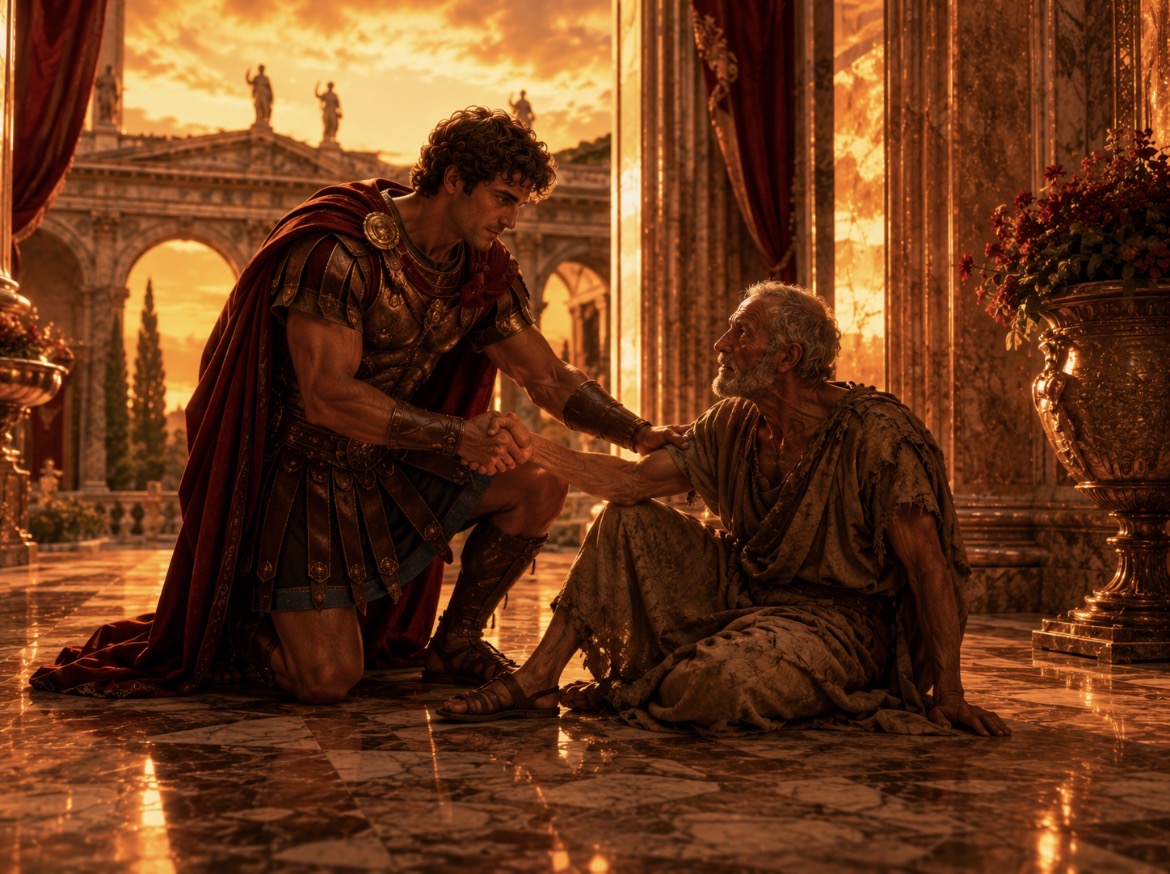
You can win a conflict by putting someone under public pressure, or set limits privately with room for repair.
The Exercise
Make a power inventory: where do you have influence, who carries the risk, and which brakes do you need?
Seneca · mentor voice, paraphrase
Do you want to compel obedience, or restore a just order?
Journal Question · saved to your Record
Formulate your code for serving strength in five lines.
Mastery Evidence
The learner delivers a concrete choice, a justification through the four virtues, and an applicable next step. Saving a draft does not complete the lesson; 'Save and complete lesson' does, after validation.
Demonstrate this in the Path of Right Action with a real example.

Test your judgment by the four virtues.