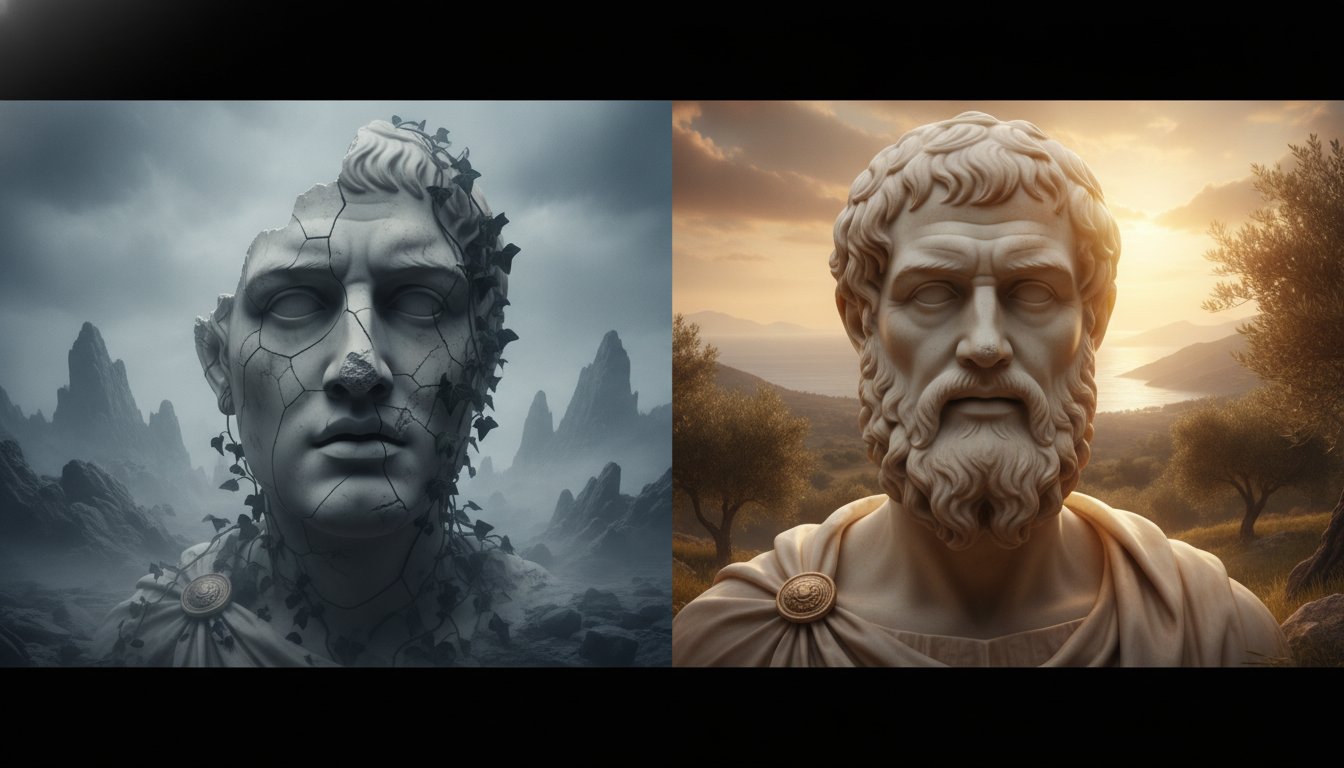
What if the state you fear as cold indifference is actually the height of human vitality? Many seekers arrive at the gates of Stoic thought only to retreat, fearing that the path leads to a life of numbness. You likely feel the tension of a high-stress world and worry that exploring apatheia vs apathy will turn you into a disconnected shell. This confusion is common. It stems from a linguistic drift that has blurred the lines between ancient wisdom and modern despair.
You'll discover that the Stoic goal isn't to stop feeling, but to stop being enslaved by irrational disturbances. We'll reclaim the original meaning of this classical term and provide a clear framework for managing your internal state without suppressing your heart. You'll learn how the ancient Stoa distinguished between healthy feelings and the destructive passions that cloud judgment. This journey moves from the hollow silence of indifference toward the steady, grounded clarity of a mind at peace with itself.
Key Takeaways
- Reclaim the ancient meaning of emotional freedom by distinguishing between the active clarity of the Stoa and the passivity of modern indifference.
- Resolve the linguistic confusion of apatheia vs apathy to ensure your pursuit of wisdom doesn't lead to a state of coldness or numbness.
- Learn to identify "passions" as errors in judgment and apply the mechanism of assent to maintain a steady, grounded internal state.
- Practice the discipline of objective representation to observe your impressions without the weight of unnecessary emotive adjectives.
Table of Contents
- Defining Apatheia: The Ancient Stoic Goal of Emotional Freedom
- Apatheia vs. Apathy: Correcting a Grave Modern Misunderstanding
- The Logic of Passions: How Apatheia Transforms Judgment
- Cultivating Apatheia: A Disciplined Path to Inner Freedom
Defining Apatheia: The Ancient Stoic Goal of Emotional Freedom
Apatheia isn't a destination. It's the fruit of a life lived in accordance with nature. Zeno of Citium first established this ideal in the early Stoa. Epictetus later refined it through his focus on the faculty of choice. Understanding the distinction of apatheia vs apathy requires looking at the foundation of the term. In our StoicOs Translation, we define it as a state of unshakable peace. The mind remains firm against the pull of irrational impulses. It's a byproduct of aretē, or excellence of character. You don't seek freedom from feeling as an end in itself. You seek wisdom. Clarity follows. Logos serves as the foundation. If your reason is structured, your emotional world remains stable.
Ancient Sources and SVF References
We look to SVF 3.448 for clarity. Here, the Stoics describe the wise person as being without passions. This doesn't mean he's a statue. It means he's free from the pathe. These are the violent, irrational contractions of the soul. Diogenes Laertius preserves many of these fragments. We must distinguish between these direct reports and later ancient testimonia. The goal wasn't a lack of care. It was a lack of disturbance. Apatheia is the absence of the passions that lead to vice. It's the removal of the internal noise that prevents clear action.
Apatheia vs. Eudaimonia
Freedom from passion is the gateway to eudaimonia. This is a flourishing life. When you remove the friction of anger and fear, you're free to act with justice. This is the core of Stoic Ethics in Practice. By resolving the tension of apatheia vs apathy, you realize that ancient peace is active. It's vibrant. It's the presence of clear judgment rather than the absence of a heart. It's the stability required to love and serve others effectively. True freedom is found when your internal state no longer depends on external chaos.
Apatheia vs. Apathy: Correcting a Grave Modern Misunderstanding
Language is a living thing. It breathes and shifts over centuries. The Greek term apatheia suffered a tragic transformation into the English word "apathy." This isn't just a semantic error. It's a fundamental misunderstanding of how a human should relate to the world. When you analyze apatheia vs apathy, you see two opposing states of being. Apathy is a withdrawal. It's the exhaustion of the spirit. It's a "giving up" on the world because the weight of caring has become too heavy.
Stoic apatheia is the opposite. It's the vitality required for active engagement. A Stoic is deeply concerned with Justice and Duty. They act with precision. They serve their community. However, they remain undisturbed by the outcome. This is the "reserve clause" in action. Marcus Aurelius wasn't a cold machine. He was a humane leader who felt the weight of his empire. He practiced clear judgment so he could lead with empathy rather than being paralyzed by fear.
The Key Differences at a Glance
- Modern Apathy: Characterized by laziness, indifference, and a lack of motivation. It's a state of emotional bankruptcy.
- Stoic Apatheia: Defined by disciplined judgment and resilience. It's the mental strength to act rightly while maintaining internal peace.
Why Terms Matter for Modern Practice
Precision prevents the rise of "macho" misinterpretations. Modern "Stoic Bro" culture often mistakes numbness for strength. This is a corruption of the philosophy. Reclaiming the dignified side of the Stoa means acknowledging that we are social animals. We don't suppress our humanity; we refine it. If you wish to deepen your understanding of these distinctions, you might Join the Journey through our weekly reflections.
The Logic of Passions: How Apatheia Transforms Judgment
A passion is not a feeling. It's a judgment. In the study of apatheia vs apathy, we must recognize that the ancient pathe were viewed as failures of reason. Anger, fear, and excessive grief are not external forces that overwhelm you. They are internal conclusions you reach. When you believe that an external event is a catastrophe, you grant it power over your peace. This is an error of logic. Stoic practice involves correcting these errors at the source. It requires a mind that functions with the precision of a master architect building a fortress against chaos.
Every experience begins with an impression, or phantasia. This is the raw data of the world. Before you can react, you must decide whether to give your synkatathesis, or assent, to that impression. You might feel the propatheiai. These are the pre-emotions. Your heart races. Your palms sweat. These are natural physical reflexes. They are not vices. The vice only begins when you agree with the racing heart and declare the situation "terrible." You can Enter the Academy of Practical Wisdom to begin the structured training required to master this faculty of choice.
Cultivate Wisdom### Fact vs. Interpretation
The core exercise is the stripping away of value judgments. Describe your circumstances in the most objective terms possible. A lost job is simply a change in employment. A harsh word is merely a vibration of air. The Dichotomy of Control serves as the essential gatekeeper of apatheia by separating our internal judgments from external events. Once you realize that only your character belongs to you, the "terrible" nature of the world dissolves into a series of neutral facts to be managed with courage.
Emotional Clarity through AI Reflection
Modern tools provide a mirror for these ancient exercises. The Virtue Guide acts as a companion in this process. It helps you identify where your logic has faltered and where you've granted assent to a disturbing impression. Pair this with The Digital Stoic Journal to track your progress. By documenting your reflections, you transform fleeting thoughts into a solid foundation for character development.
Cultivating Apatheia: A Disciplined Path to Inner Freedom
Ancient wisdom demands rigorous practice. It's not enough to understand the theoretical distinction of apatheia vs apathy; you must live the difference through daily askēsis. Begin with objective representation. Strip away the emotive adjectives that color your world. A "catastrophic failure" is simply "a result that differed from the plan." This isn't denial. It's clarity. Second, perform an analysis of desire. Recognize when you're pursuing things outside your control. Finally, commit to intentional action. Focus on your aretē, or excellence of character, rather than the external rewards of your labor. The Stoic Training Cards serve as a vital anchor here. They provide the necessary reminders to pause before you assent to a disturbing impression.
Evening Reflection and Character Building
Audit your spirit before sleep. Use The Stoic Journal to examine the day's passions. Did you lose your temper during a stressful meeting? Workplace friction is merely raw material for the exercise of temperance. Ask yourself why you granted power to another person's words. By auditing these moments, you refine your judgment. You transform a high-pressure environment into a private laboratory for character development. This disciplined review ensures that today's errors become tomorrow's wisdom.
Finding Inner Freedom
The journey from reactive emotion to proactive virtue leads to a life of profound stability. You're moving away from the modern trap of indifference and toward the ancient height of clarity. By resolving the tension of apatheia vs apathy, you reclaim your agency. You no longer wait for the world to be kind to feel at peace. You possess the peace within your own faculty of choice. Find Inner Freedom.
Reclaiming the Unshakable Mind
The distinction between apatheia vs apathy reveals a path toward genuine human flourishing. The ancient Stoa didn't demand a heart of stone, but a mind of profound clarity. By treating passions as failures of judgment rather than inevitable forces, you regain your agency. This shift transforms your relationship with the world. You no longer react to external chaos with fear or anger. Instead, you respond with the steady weight of virtue.
Realizing this freedom requires consistent, methodical effort. It's a serious pursuit of internal development that goes beyond simple motivation. Our , trained on the original texts of Seneca and Epictetus, serves as a disciplined companion for this work. It prioritizes clarity of thought over temporary inspiration to help you build a character that remains firm in any storm.
Cultivate Wisdom with the Step forward with a steady heart and a sharpened mind. The journey toward emotional clarity is a lifelong commitment, but every instance of clear judgment brings you closer to the inner freedom you seek.
Frequently Asked Questions
Does Stoicism teach you to suppress your emotions?
Stoicism doesn't advocate for suppression. It demands transformation. You don't ignore the emotion; you examine the judgment that birthed it. By correcting the error in your logos, the disturbing passion naturally dissolves. You still experience the initial physical reflex, the propatheiai, but you refuse to give your assent to irrationality. This isn't coldness. It's the restoration of your internal order through disciplined reason and clear sight. It's about finding true freedom.
What is the difference between apatheia and ataraxia?
While both terms describe peace, they stem from different roots. Apatheia is the Stoic freedom from the pathe, or irrational passions. Ataraxia is the state of being unperturbed, often used by Epicureans to describe the absence of pain. For a Stoic, peace is a byproduct of virtue and active duty. It's not merely the avoidance of disturbance, but the presence of right reason in every action and choice.
Can a Stoic feel love and affection?
Love is essential to the Stoic life. The doctrine of oikeiosis teaches us to expand our circle of concern to include all of humanity. Stoics experience eupatheiai, or good feelings, which include well-ordered affection and joy. These are distinct from the irrational attachments that cloud judgment. Apatheia allows you to love others without being destroyed by things you can't control, such as their health or their final choices in life.
How long does it take to achieve a state of apatheia?
Refinement is a lifelong labor. The ancient Stoa viewed apatheia as the mark of the Sage, an ideal state few reach perfectly. For the student, progress is a steady movement toward stability. You measure success by your ability to pause before assenting to a disturbing phantasia. It's not a sudden arrival. It's the cumulative result of daily auditing your soul and choosing virtue over the pull of irrational impulses.
Is apatheia the same as being "stoic" in the lowercase sense?
There is a vast distance between philosophical Stoicism and the lowercase "stoic" archetype. The latter often describes a person who is merely numb or suppressed. In the debate of apatheia vs apathy, we see that true Stoic peace is vibrant. It's not the absence of a heart, but the presence of clear judgment. You don't grit your teeth to endure; you use reason to see the truth.
Ed Korporaal
Founder, StoicOs.ai