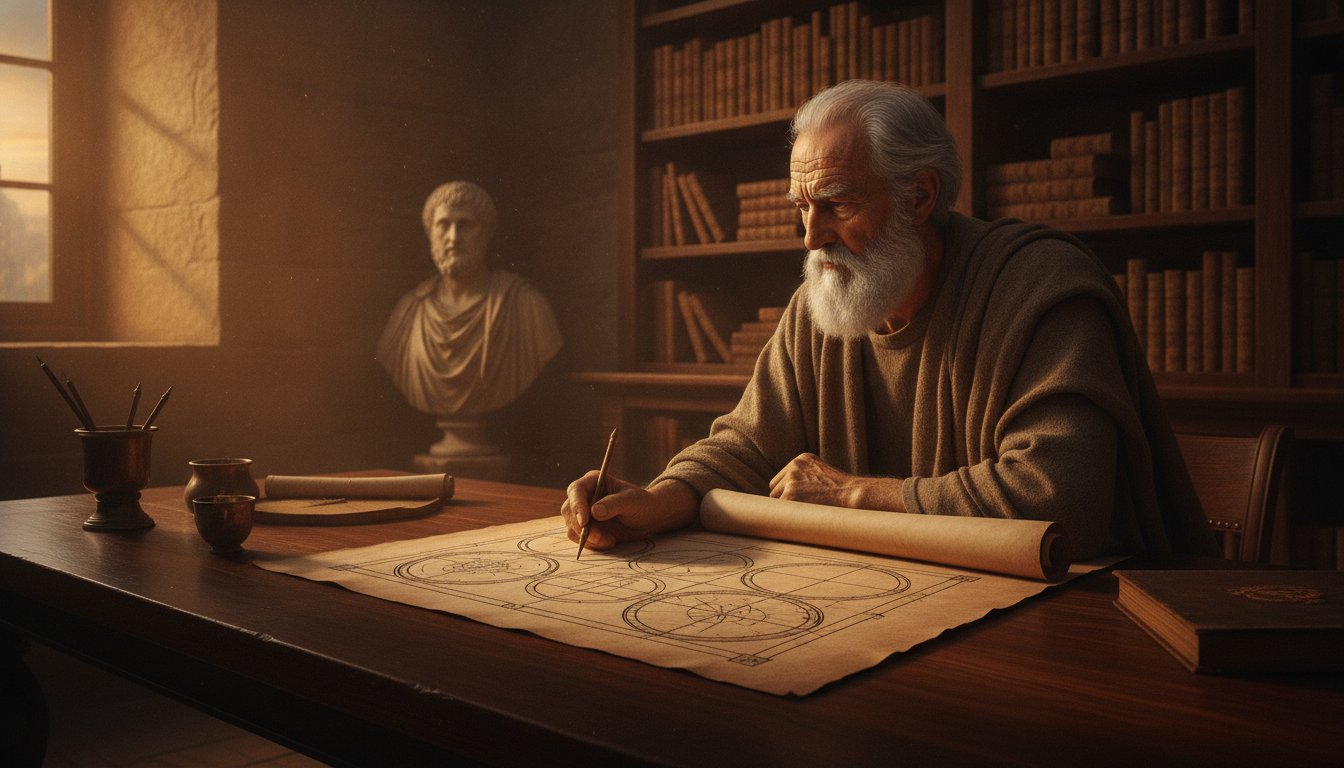
What if the most effective tool for navigating the digital chaos of the modern age was actually forged in the fires of first-century Rome? You likely feel the relentless pressure of time slipping through your fingers. It's a sensation mirrored by the 42% surge in print sales for Seneca’s work as readers seek an anchor in the storm. This seneca letters from a stoic summary is your guide to the 124 epistles known as the Epistulae Morales ad Lucilium. They serve as a final, urgent blueprint for the soul, written by a man who understood that character is a serious pursuit rather than a casual utility.
You understand the weight of constant social approval and the quiet anxiety of a future you cannot control. It's a heavy burden to carry alone. We will help you dismantle these pressures by exploring Seneca’s architectural wisdom. You'll learn how to reclaim your mind and treat your internal development with the gravity it deserves. We'll examine his core teachings on friendship, mortality, and the disciplined mastery of time. This journey provides the structured understanding and practical exercises you need to find a sense of grounded perspective in an era of distraction.
Key Takeaways
- Understand how Seneca’s 124 letters to Lucilius serve as a final testament for maintaining internal order amidst the volatility of the Roman world.
- Use this seneca letters from a stoic summary to distinguish between your true possessions and the "preferred indifferents" that often distract the soul.
- Reclaim the currency of your life by learning to differentiate between mere busyness and the intentional pursuit of wisdom.
- Cultivate a fellowship of character by choosing companions who act as a whetstone for your personal development.
- Master the practice of Memento Mori to dissolve anxiety and find the calm authority necessary to face life’s final lessons.
Table of Contents
- The Epistles to Lucilius: A Final Testament of a Roman Sage
- Reclaiming the Mind: The Stoic Blueprint for Inner Liberty
- The Currency of Life: Seneca on the Mastery of Time
- Stoic Fellowship: The Role of Friendship and Society
- The Final Lesson: Rehearsing Death to Master Life
The Epistles to Lucilius: A Final Testament of a Roman Sage
Imagine an aging man, once the most powerful advisor in Rome, sitting in the twilight of his life. He is surrounded by the opulence of an empire but focused entirely on the poverty of the soul. This is the setting for Seneca's Epistulae Morales ad Lucilium. Written between 62 and 65 AD, these 124 letters represent the evolution of a tradition that began nearly 300 years earlier when Zeno of Citium first taught on the Painted Stoa in Athens. This seneca letters from a stoic summary reveals how the philosophy shifted from the rigid logical structures of the early founders into a deeply personal, lived experience. Seneca wasn't merely writing to a friend; he was distilling the essence of a movement for a world that had become increasingly volatile.
Seneca lived under Nero's paranoid reign. The stakes weren't theoretical; they were mortal. While scholars often debate the "disguised essay" theory, suggesting these letters were always intended for the public eye, their intimacy remains their greatest strength. He used the letter format to make dense philosophical concepts feel like urgent, personal advice. By doing so, he transformed Stoicism from a Greek academic pursuit into a Roman manual for survival. This section of our journey explores how Seneca’s final works served as the vital link between the foundations of the Stoa and the later reflections of the Roman masters.
The Man Behind the Letters: Seneca's Life and Legacy
Seneca lived a life of profound contradiction. He was a wealthy statesman and a high-ranking official, yet he championed the simplicity of Stoic discipline. This proximity to power didn't make his practice easier; it made it vital. His struggle shaped his legacy, proving that Stoicism isn't for the hermit but for the person in the arena. This practical turn in the philosophy would later influence the Emperor Marcus Aurelius. A century later, Aurelius would use Seneca’s emphasis on the "inner citadel" to maintain his character while governing an empire. Seneca proved that virtue is most necessary when the world is most demanding.
Mentorship as a Journey: Why Seneca Wrote to Lucilius
The letters follow a specific pedagogical rhythm. Early entries focus on basic habits and the avoidance of crowds. As the correspondence progresses, the inquiry deepens into complex metaphysics and the nature of the universe. Seneca isn't just lecturing Lucilius; he's traveling alongside him. He positions himself as a patient in the same hospital, sharing the remedies that have worked for his own ailments. This interactive, evolving guidance is exactly what we aimed to capture with Seneca AI. It serves as a modern bridge to this ancient wisdom, allowing you to engage with these timeless lessons through a contemporary lens that honors the chronological journey of the Stoic tradition.
Reclaiming the Mind: The Stoic Blueprint for Inner Liberty
The letters aren't just ancient correspondence; they're a manual for mental liberation. This seneca letters from a stoic summary emphasizes that the mind is the only thing we truly own. While the world outside may be chaotic, the territory within remains yours to govern. Seneca distinguishes between "the good"—which is Virtue—and "preferred indifferents" like money or status. These things are convenient, but they don't define your worth. If you lost them tomorrow, would you still be you? Seneca suggests that the sage is never poor because their wealth is stored in a place where Fortune cannot reach.
The Mind as Your Sole Possession
Seneca’s first letter to Lucilius begins with a blunt directive: "Gather and save your time." He wants us to stop being beggars for external validation. According to the Stanford Encyclopedia of Philosophy on Seneca, his letters serve as a guide to self-transformation through the refinement of the will. He teaches that internal character is a fortress. External wealth is merely a temporary loan from Fortune.
- Command Exercise: Observe the mind as a separate entity today. When a thought of anger or fear arises, look at it from a distance. Say to it: "You are just a thought, and not the thing itself."
On Being Content with "Enough"
Wealth is often a trap. Seneca defines "natural wealth" as that which satisfies the body's basic needs. "Imaginary wealth" is the endless pursuit of more. It’s a moving target that the undisciplined mind never hits. Seneca often practiced "voluntary poverty," setting aside days to live on meager rations. He wanted to test the strength of his soul. He proved that "Enough" is a state of mind, not a number in a bank account.
He also warns against the "trap of social approval." He avoided the cruelty of public spectacles because he knew the crowd's influence could erode a man's character. To reclaim your mind, you must learn to be your own best company. If you are looking for a place to discuss these shifts in perspective, consider joining the global community at the Agora, where we explore this seneca letters from a stoic summary and other ancient blueprints together.
The Currency of Life: Seneca on the Mastery of Time
Time is the only thing that even a most grateful person cannot repay. This seneca letters from a stoic summary centers on a harsh but liberating truth: we aren't given a short life, but we make it so. We are wasteful with the one resource that is truly finite. Money can be recovered. Reputation can be rebuilt. But once a moment passes, it's gone forever. Seneca argues that most people don't live; they merely exist. They're busy with trivialities, social obligations, and the pursuit of things that don't matter. To a Stoic, being busy is often just a sophisticated way of being lazy with one's soul.
The correspondence transitions from simple advice to a deep scholarly analysis of Seneca's Letters regarding the philosophical way of life. He warns us that procrastination is the greatest waste of life. It snatches away each day as it comes and denies us the present by promising the future. The future is an uncertainty. The past is a certainty. Only the present is ours to act upon. If you're always preparing to live, life itself will pass you by.
Collecting and Saving Your Time
In Letter 1, Seneca urges Lucilius to "gather and save" his time. He identifies three ways we lose it: some is snatched from us, some is filched, and some merely slips away. The most shameful loss is that which occurs through our own negligence. We must identify our personal "time-thieves." These are often social pressures, empty entertainment, or the heavy weight of regret. To combat this, you might use the Stoic Journal to audit your daily usage. Look at your day with the eyes of a cold accountant. Did you spend it, or did you lose it?
The Architecture of a Well-Spent Day
Seneca didn't believe in drifting through the hours. He treated each day as a complete life in itself. His routine involved morning reflection and evening self-examination. He prioritized deep study of the ancient masters. By reading the wisdom of those who came before, we "expand" our lifespan. We aren't just living our own years; we're inheriting the centuries of thought that preceded us. Make it a point to conclude each day by saying, "I have lived." This doesn't mean you've done everything. It means you've inhabited the present moment with full awareness. This practice turns a frantic existence into a stable, architectural life.
Stoic Fellowship: The Role of Friendship and Society
Seneca’s letters present a fascinating paradox. The Stoic sage is entirely self-sufficient, yet they value friendship above almost all else. This seneca letters from a stoic summary explores how we aren't meant to walk the path of virtue in isolation. We are social animals, built for cooperation. While the sage lacks nothing for their own happiness, they desire friends to practice the art of friendship and to provide a mirror for their own character. Friendship is the architectural support that keeps the individual structure from buckling under the weight of life's trials.
Seneca reminds Lucilius that we should judge a person before making them a friend. However, once the bond is formed, we must trust them with our whole heart. Treat them as if they were another version of yourself. There is no room for hesitation once you have invited someone into your life. This level of vulnerability is not a weakness. It is the foundation of a shared journey toward wisdom. We don't just seek friends for comfort; we seek them for the mutual sharpening of our souls.
Choosing Your Circle: The Architecture of True Friendship
Differentiate clearly between fair-weather friends and philosophical companions. Fair-weather friends are attracted to your status or wealth, but philosophical companions are attracted to your character. True friendship requires total vulnerability. It’s a serious commitment to the other person's growth as much as your own. Reflect on this: Does your inner circle reflect the person you wish to become? If your companions prioritize the superficial, your own character will inevitably soften. Choose those who challenge you to be better, just as Seneca challenged Lucilius.
On Crowds and the Danger of Public Influence
Seneca’s warning in Letter 7 is visceral. He describes returning from a gladiatorial show feeling more greedy, more ambitious, and more cruel. The crowd is a contagion. In our era, this "crowd" isn't just in a physical stadium. It's the digital mob found in social media algorithms. These platforms are designed to trigger our most reactive, least Stoic impulses. To protect your progress, you must learn to retreat into your Inner Citadel. This is the mental space where your values remain untouched by the noise of the masses. It is a place of quiet authority and self-governance.
Finding a space that encourages growth rather than reaction is vital for the modern seeker. If you are seeking a community that values wisdom over the frantic pace of the digital age, join the global community at the Agora to find your philosophical companions and build your own fellowship of character.
The Final Lesson: Rehearsing Death to Master Life
Seneca did not write these letters from the safety of a quiet library. He wrote them while the shadow of Nero’s paranoia lengthened. This seneca letters from a stoic summary concludes with the most difficult lesson of all: Memento Mori. To the Stoic, rehearsing death is not a morbid obsession. It is the ultimate act of liberation. If you master the fear of the end, you master the fear of everything else. Most people are slaves to their anxieties because they are slaves to their breath. They cling to life with such desperation that they forget how to inhabit it. Seneca teaches us that the quality of life matters far more than its duration.
In 65 AD, the command finally came. Nero ordered Seneca to take his own life. The philosopher did not flinch. He did not beg. He applied the very principles he had sent to Lucilius in his final moments. He comforted his weeping friends, asking them where their years of philosophical study had gone if they could not face necessity with composure. He died as he lived; a man who had already rehearsed his end a thousand times in his mind. His death was the final exclamation point on a life dedicated to the building of character.
Breaking the Slavery of Fear
The Stoic does not fear death. They fear never having truly begun to live. We often spend our days in a state of "busy-ness" to avoid the quiet realization of our mortality. To break this cycle, use the Premeditatio Malorum: The Stoic Art of Tactical Resilience. This practice involves visualizing the worst possible outcomes before they happen. It strips away the power of surprise. When you have already faced the loss in your mind, the reality cannot shatter you. You can practice this daily using the Stoic Training Cards, which provide structured prompts to test your soul’s defenses against the unexpected.
The : A Modern Companion for Seneca’s Wisdom
Seneca’s letters were a bridge between a mentor and a seeker. Today, that bridge remains open through the Virtue Guide. It acts as a digital Lucilius, offering personalized insights that translate ancient blueprints into modern actions. The role of AI in this context is to make the vast 'Bibliotheca Stoica' accessible to the modern mind. It provides a framework for living rather than just a collection of quotes. It is a private, trusted advisor that helps you reclaim your time and character in an era designed to steal both.
Continue your journey: Explore the as your practical companion for applying these timeless principles to your daily life. Let it guide you through the next chapter of your internal development as you build your own inner citadel.
The Architecture of Your Future Self
The letters of Seneca represent a pivot point in the 2,300-year history of the Stoa, turning abstract logic into a lived art of endurance. Throughout this seneca letters from a stoic summary, we have seen how the architectural wisdom of the ancient world provides stability for the digital mind. You have learned that your character is your only true possession and that every well-spent day is a complete life in itself. This journey doesn't end with the final page of a book, but begins with the first step of practice.
Continue your journey into the mind of the great Roman sage by using the as your practical companion. We invite you to explore the Virtue Guide and begin your Stoic training today as you step into the next chapter of your development. Stand firm in your pursuit of wisdom.
Frequently Asked Questions
What is the main message of Seneca's Letters from a Stoic?
The main message of these letters is that true freedom and happiness come from mastering your own mind and character. You cannot find lasting peace in external wealth or the shifting approval of others. By focusing on virtue and reclaiming your time, you build an unshakable inner stability. This seneca letters from a stoic summary highlights how these principles remain steady regardless of the whims of fortune or external chaos.
Who was Lucilius in Seneca's letters?
Lucilius Junior was a real historical figure who served as the procurator of Sicily during the mid-first century AD. While he was Seneca’s friend, many scholars believe he also represents any student seeking to refine their soul. The letters act as a progressive curriculum of mentorship. They move from simple advice to deep philosophical inquiry, guiding the reader from a casual interest to a serious pursuit of internal development.
Is 'On the Shortness of Life' included in Letters from a Stoic?
No, 'On the Shortness of Life' is a separate essay titled De Brevitate Vitae. However, the themes of time mastery and the brevity of existence are foundational to the letters. The very first epistle echoes these sentiments by urging the reader to gather and save their time. Both works are essential components of Seneca's architectural blueprint for the soul and his views on living a disciplined life of purpose.
How can Stoicism help with modern anxiety?
Stoicism helps with modern anxiety by teaching the "Dichotomy of Control," which is the practice of distinguishing between what you can change and what you cannot. You focus your energy only on your own thoughts and actions. By rehearsing potential challenges through negative visualization, you remove the power that uncertainty holds over you. It transforms a frantic mind into a steady, grounded fortress of calm perspective and quiet authority.
What are the best Seneca letters to start with?
For those beginning their study, Letter 1 on saving time, Letter 7 on the danger of crowds, and Letter 18 on practicing poverty are the most effective starting points. These specific epistles provide immediate, practical advice for reclaiming your focus in a digital age. They offer a direct invitation to test your resilience against modern comforts and social pressures. This seneca letters from a stoic summary recommends these for their clarity and urgency.
Why did Seneca have to commit suicide?
Seneca was ordered to commit suicide in 65 AD after being accused of involvement in the Pisonian conspiracy to assassinate Emperor Nero. Although his participation was never proven, he accepted the command with profound Stoic calm. He used his final moments to comfort his family and practice the "rehearsing of death" he had long taught. His end became the final, disciplined lesson in his philosophy of character development and internal fortitude.
Ed Korporaal
Founder, StoicOs.ai