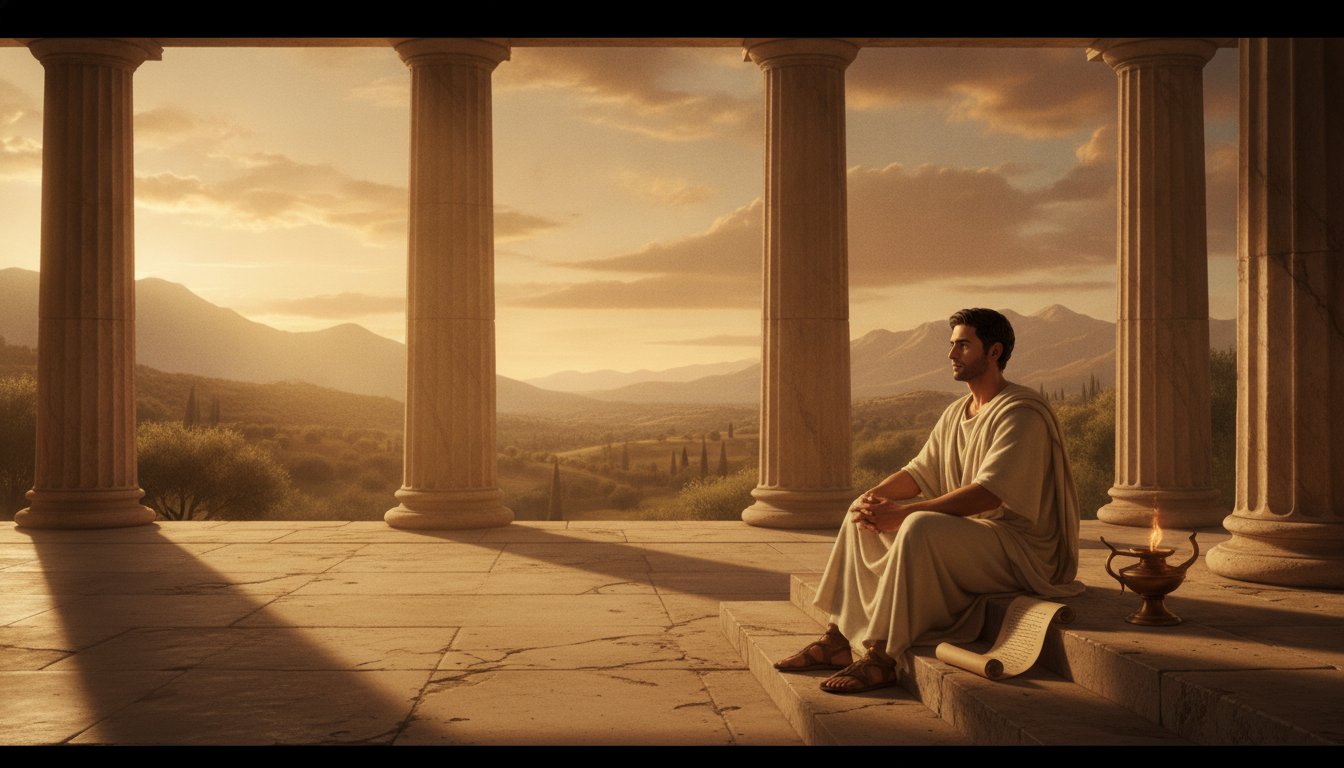
Wat als uw geest geen reactieve spiegel was voor elke digitale notificatie en externe crisis, maar een vesting van bewuste keuze? De meesten van ons leven in een toestand van voortdurende emotionele reactiviteit, heen en weer geslingerd door gebeurtenissen die volledig buiten onze controle liggen. Het is uitputtend om te bestaan op de genade van de chaos in de wereld. U voelt waarschijnlijk het gewicht van dit digitale lawaai en het gebrek aan een gestructureerd pad naar mentale helderheid. Door u te verbinden met doelbewuste stoïcijnse trainingsoefeningen, begint u het serieuze werk van het herwinnen van uw innerlijk landschap. Dit gaat niet over het onderdrukken van emoties of het bereiken van een koude onverschilligheid. Het gaat over het bouwen van een fundament van rede dat standvastig blijft wanneer de grond onder u verschuift.
In deze gids ontdekt u de rigoureuze mentale disciplines die oude filosofen gebruikten om veerkracht en helder oordeel te cultiveren. We onderzoeken hoe deze klassieke principes kunnen worden omgezet in een praktische dagelijkse routine, ontworpen voor de moderne tijd. U leert onderscheid te maken tussen wat u kunt veranderen en wat u moet aanvaarden: een verschuiving die rechtstreeks leidt naar ware innerlijke vrijheid. We bekijken de specifieke methoden voor het verfijnen van uw karakter en het handelen met wijsheid onder druk. Dit is een reis naar het worden van de architect van uw eigen vrede.
Kernpunten
- Beschouw askēsis als een brug tussen theorie en geleefde deugd. Deze stoïcijnse oefeningen bieden de structurele stabiliteit die nodig is om met een vaste hand door een chaotische wereld te navigeren.
- Internaliseer de dichotomie van controle om onderscheid te maken tussen wat in jouw macht ligt en wat niet. Deze praktijk beschermt je innerlijke vrijheid tegen de grilligheid van externe gebeurtenissen.
- Oefen mogelijke tegenslagen in gedachten door middel van premeditatie om hun kracht te ontnemen. Wanneer je tegenspoed anticipeert, ontmoet je die met helder oordeel in plaats van reactieve schrik.
- Voer een gedisciplineerde routine in van ochtendintentie en avondreflectie. Dit dagelijkse onderzoek zorgt ervoor dat je karakter de voornaamste focus van je aandacht blijft.
- Maak gebruik van filosofische metgezellen om oude wijsheid te integreren in je digitale leven. Hulpmiddelen zoals de Virtue Guide helpen moderne technologie te transformeren tot een serieus instrument voor karakterontwikkeling.
Inhoudsopgave
- De architectuur van standvastigheid: waarom we stoïcijnse oefeningen beoefenen
- Kerndisciplines: oude theorie omzetten in moderne gewoonte
- Het ontwerpen van je dagelijkse zelfreflectie: ochtend- en avondroutines
- Digitale wijsheid: AI inzetten voor filosofische groei
De Architectuur van Standvastigheid: Waarom We Stoïcijnse Oefeningen Beoefenen
Filosofie is geen verzameling interessante ideeën die je van een afstand bewondert. Het is een ambacht. In de klassieke traditie stonden stoïcijnse trainingsoefeningen bekend als askēsis, een term die de strenge voorbereiding van een atleet beschrijft. Deze beoefening vormt de onmisbare brug tussen abstracte theorie en de geleefde werkelijkheid van deugd. Zonder bewuste toepassing blijft wijsheid een schim in de geest. Stoïcijnse training is de doelgerichte verfijning van het vermogen tot keuze. Door deze verfijning groeien we van mensen die overgeleverd zijn aan hun omstandigheden naar mensen die meester zijn over hun innerlijke reacties.
Marcus Aurelius vergeleek het leven treffend met een veldslag in plaats van een dans. Het terrein is vaak ongelijk. De tegenstand is voortdurend aanwezig. We beoefenen deze disciplines niet om emotioneel gevoelloos te worden of ons los te koppelen van de menselijke ervaring. We streven naar de cultivering van innerlijke vrijheid. Die vrijheid bevindt zich in de ruimte tussen een externe gebeurtenis en ons oordeel daarover. Door de geest te trainen elke indruk te pauzeren en te beoordelen, bouwen we een stabiel fundament dat standhoudt wanneer de wereld onbestendig aanvoelt. Het doel is een geest die zowel veerkrachtig als diep menselijk is.
Karakter boven Productiviteit
Moderne interpretaties reduceren deze oude instrumenten vaak tot louter "levenshacks" die bedoeld zijn om de output of professionele uithoudingsvermogen te vergroten. Dit is een oppervlakkige vertekening van de bedoeling van de filosofie. Binnen het authentieke stoïcijnse kader is deugd het enige ware goed. We beoefenen stoïcijnse trainingsoefeningen niet om betere werknemers of efficiëntere verdieners te worden. We oefenen om betere mensen te worden. Dit onderscheid scheidt het diepgaande streven naar praktische wijsheid van het hectische lawaai van de hedendaagse prestatiecultuur. Je kunt dit fundamentele concept verder verkennen door Why the Stoics Believed Virtue Is the Only True Good te lezen. Ware succes ligt in de integriteit van je karakter, niet in de lengte van je takenlijst. We zoeken een gestructureerde discipline die wijsheid, moed en rechtvaardigheid stelt boven oppervlakkige maatstaven van succes.
Kerndisciplines: Oude Theorie Omzetten in Moderne Gewoonte
De overgang van intellectueel begrip naar diepgewortelde gewoonte vereist een systematische aanpak. Deze stoïcijnse oefeningen vormen het mentale geraamte voor een veerkrachtig leven. We beginnen met het verfijnen van onze waarneming. We leren de lagen van waardeoordelen af te stropen die we gewoonlijk over externe gebeurtenissen leggen. Dit proces is geen vlucht uit de werkelijkheid. Het is een nauwkeurigere manier om ermee om te gaan. Door de geest te trainen de dingen te zien zoals ze zijn, laten we ons niet langer verrassen door de natuurlijke bewegingen van de wereld.
Het Onderscheid tussen Wat Wel en Niet in Onze Macht Ligt
Epictetus leerde dat de fundamentele taak van de filosofie is om onderscheid te maken tussen wat van ons afhankelijk is en wat niet. Dit is de hoeksteen van alle vooruitgang. We richten onze training op drie afzonderlijke gebieden: onze verlangens, onze handelingen en onze instemming met indrukken. Denk aan een deadline met hoge inzet op het werk. De uiteindelijke beslissing van een manager of de stabiliteit van de digitale infrastructuur ligt buiten jouw bereik. Je inspanning, je focus en je oordeel over de situatie vallen volledig binnen jouw domein. De Academy of Practical Wisdom benadrukt dit model om objectieve feiten te scheiden van emotionele interpretaties. Deze helderheid voorkomt dat we kostbare energie verspillen aan wat we niet kunnen beheersen.
Het Perspectief van Bovenaf
We raken vaak verstrikt in de kleinigheden van onze eigen grieven. Het "Perspectief van Bovenaf" is een oefening in schaal. Stel je voor dat je opstijgt boven je directe omgeving. Je ziet je stad, je continent en de aarde zelf. Vanuit deze hoogte verliezen triviale angsten hun gewicht. Dit is niet bedoeld om je leven onbeduidend te laten voelen. Het belicht juist onze gedeelde menselijke conditie. Het wekt een gevoel van rechtvaardigheid en verbondenheid met het geheel. Door de uitgestrektheid van tijd en ruimte te aanschouwen, vinden we de helderheid die nodig is voor juist handelen in het huidige moment. Je kunt je aanmelden voor de StoicOs.ai Nieuwsbrief om wekelijkse reflecties te ontvangen over hoe je deze kosmische perspectieven in je dagelijks leven kunt integreren.
Ware mentale kracht vereist ook praemeditatio malorum, de voorbeschouwing van tegenspoed. We oefenen ons mentaal in mogelijke obstakels. Dit neemt de pijn van de verrassing weg. We beoefenen ook objectieve representatie. Dit betekent dat we gebeurtenissen beschrijven in heldere, onopgesmukte taal. Een gemiste kans is gewoon een gemiste kans; het is geen "ramp." Ten slotte omarmen we vrijwillig ongemak. Door af en toe bewust de moeilijkere weg te kiezen, bewijzen we onszelf dat we kunnen verduren. We bouwen een karakter dat voor zijn stabiliteit niet afhankelijk is van uiterlijk comfort.
Uw Dagelijkse Zelfstudie Vormgeven: Ochtend- en Avondroutines
Een leven van deugd vereist architectonische stabiliteit. We laten ons karakter niet aan het toeval over. Stoïcijnse oefeningen zijn het meest effectief wanneer zij uw waakzame uren omlijsten. Deze structuur zorgt ervoor dat filosofie een levende kracht blijft in plaats van een vergeten theorie. Door deze bewuste ruimtes te creëren, herneemt u uw handelingsvermogen van het hectische tempo van het moderne leven. U beweegt van een toestand van voortdurende reactie naar één van weloverwogen keuze.
De Ochtendvoorbereiding
Voordat de wereld haar eisen stelt, moet u uw geest voorbereiden. Dit is het moment om de uitdagingen van de dag te anticiperen en intenties voor deugd te stellen. We gebruiken de "Voorbehoudclausule" om innerlijke rust te bewaren. Wanneer u een handeling plant, voegt u de mentale kanttekening toe: "Ik zal dit doen, als het lot het toestaat." Dit erkent uw inspanning terwijl u de onvoorspelbaarheid van de wereld aanvaardt. We bereiden ons ook voor op sociale wrijving. Volgens de Marcus Aurelius-methode erkennen we dat we de ondankbare en de arrogante zullen tegenkomen. We herinneren onszelf eraan dat zij onze naasten zijn en dat hun fouten voortkomen uit een gebrek aan wijsheid. Deze voorbereiding ontneemt de verrassing haar kracht.
Verken de details van deze praktijk in onze gids over de Stoïcijnse Ochtendroutine: De Geest Voorbereiden op de Dag.
De Avondzelfstudie
De dag sluit af met een gedisciplineerde beoordeling van uw handelingen en oordelen. Deze avondreview is niet bedoeld voor zelfkastijding, maar voor leren. Het is een humane zelfstudie. U treedt op als getuige van uw eigen leven en observeert uw keuzes met een rustig, objectief oog. We stellen onszelf drie wezenlijke vragen voor het slapengaan: Wat heb ik goed gedaan? Wat heb ik fout gedaan? Wat kan ik beter doen? Door te identificeren waar uw oordeel tekortschoot, verzekert u zich van meer helderheid morgen. Het gebruik van een gestructureerd hulpmiddel zoals het Digitale Stoic Journal kan het nodige kader bieden voor deze diepe reflectie. Deze stoïcijnse oefeningen maken van elke dag een leerruimte voor karakterontwikkeling.
Cultiveer Wijsheid## Digitale Wijsheid: AI Inzetten voor Filosofische Groei
We leven in een tijdperk dat wordt gekenmerkt door digitaal lawaai. Voor velen is technologie een bron van versnippering en reactief leven. Wanneer zij echter geworteld is in serieuze filosofie, kunnen dezelfde hulpmiddelen dienen als een moderne pedagoog. Stoïcijnse oefeningen vereisen niet dat we ons terugtrekken uit de wereld, maar dat we er intelligenter mee omgaan. We kunnen overgaan van het passief consumeren van teksten naar een actieve, gedisciplineerde dialoog. Technologie, met intentie gebruikt, wordt een spiegel voor de ziel in plaats van een venster op chaos. Het biedt de middelen om askēsis te beoefenen te midden van een druk digitaal landschap.
Begeleide Reflectie met de Virtue Guide
De Virtue Guide fungeert als een filosofische metgezel bij het onderzoeken van indrukken. Het stelt u in staat direct in gesprek te gaan met de gedestilleerde wijsheid van Aurelius, Epictetus en Seneca. Door te werken met de Marcus Aurelius AI kunt u uw innerlijke reacties op externe gebeurtenissen in real time onderzoeken. Beoordeelt u deze situatie correct? Is uw onrust gebaseerd op een feit of op een interpretatie? Deze digitale discipline helpt u helderheid te vinden wanneer de druk van het moment uw kalmte bedreigt. Het transformeert uw mobiele apparaat tot een serieus instrument voor karakterontwikkeling in plaats van een louter middel voor afleiding.
De Academie Betreden
Ware meesterschap vereist een gestructureerde omgeving. De Academie voor Praktische Wijsheid biedt het architectonische kader dat nodig is om de kloof te overbruggen tussen oude theorie en moderne toepassing. De nadruk ligt op de ontwikkeling van helder denken via gestructureerde logicacursussen, ontworpen voor de hedendaagse strateeg. In de Levende Bibliotheek vindt u de middelen om specifieke deugden te verbinden met uw dagelijkse beslissingen. Dit is geen vrijblijvende bezigheid. Het is een toewijding aan het bouwen van een onwankelbaar karakter. Door deze stoïcijnse oefeningen te integreren in uw digitale leven, cultiveert u een gevoel van innerlijke vrijheid dat onafhankelijk blijft van externe omstandigheden. U bouwt een vesting van binnenuit.
De Architectuur van een Veerkrachtig Leven
Ware mentale kracht is geen gave van temperament, maar het resultaat van consequente oefening. Door stoïcijnse trainingsoefeningen in je dagelijks bestaan te integreren, bouw je een fundament dat standhoudt wanneer externe omstandigheden onbestendig worden. Je hebt geleerd dat deze discipline zowel de ochtendlijke voorbereiding op de strijd als het avondlijke onderzoek van je eigen karakter vereist. Het is een serieuze, levenslange zoektocht naar wijsheid die je volledige aandacht vraagt en een toewijding aan helder oordeel boven alles.
Wij bieden een gestructureerde omgeving voor deze ontwikkeling via ons onafhankelijke en niet-commerciële platform. Je kunt de Levende Bibliotheek gratis raadplegen of gebruikmaken van de AI-gestuurde Virtue Guide, die nauwgezet is getraind op de klassieke teksten van Aurelius, Epictetus en Seneca. Deze hulpmiddelen zijn geen afleidingen; het zijn moderne pedagogen die zijn ontworpen om je te helpen je indrukken met grotere precisie te onderzoeken. Dit is jouw uitnodiging om de theorie achter je te laten en de geleefde werkelijkheid van de praktische filosofie te betreden.
Betreed de Academie van Praktische Wijsheid Begin vandaag nog met het verfijnen van je oordeelsvermogen. De chaos van de wereld zal voortduren, maar jouw innerlijke reactie daarop is volledig van jou. Cultiveer het karakter van een leider en vind de innerlijke vrijheid die je zoekt.
Veelgestelde vragen
Wat zijn de meest effectieve stoïcijnse oefeningen voor beginners?
Het beste beginpunt is de Dichotomie van Controle. Deze eenvoudige indeling van gebeurtenissen in wat "aan ons ligt" en wat "niet aan ons ligt" biedt onmiddellijke mentale verlichting. Beginners doen er ook goed aan een vaste avondreflectie in te voeren. Door je dagelijkse handelingen met een menselijke maar objectieve blik te overdenken, begin je de specifieke patronen in je oordeelsvorming te herkennen die verfijning vereisen.
Hoe pas ik de Dichotomie van Controle toe in mijn professionele leven?
Verschuif je aandacht van externe uitkomsten naar interne intenties. Je hebt geen controle over of een klant een contract tekent of hoe een leidinggevende jouw prestaties beoordeelt. Wat je wél beheerst, is de zorgvuldigheid van je onderzoek, de helderheid van je communicatie en je trouw aan ethische normen. Door je gevoel van succes te verankeren in je eigen handelen, blijf je standvastig, ook wanneer de professionele omstandigheden onzeker zijn.
Gaat stoïcijnse training over het onderdrukken van emoties?
Nee. Het gaat om de omvorming van destructieve hartstochten tot rationele gemoedstoestanden. Het doel van stoic training exercises is niet om emotioneel gevoelloos te worden, maar om een toestand van helder oordeel te bereiken. We onderzoeken de onderliggende overtuigingen die irrationeel lijden veroorzaken. Wanneer je een valse waarneming corrigeert, neemt de daaruit voortvloeiende emotionele reactiviteit af. Dit schept ruimte voor een kalme, gewortelde aanwezigheid in de wereld.
Hoe lang duurt het voordat stoïcijnse oefeningen resultaat opleveren?
Intellectuele verlichting treedt vaak op het moment dat je de grenzen van je controle aanvaardt. Het opbouwen van een onwrikbaar karakter is echter een levenslang bouwproject. Het is een ambacht. Binnen enkele weken van consequente beoefening zul je waarschijnlijk een afname van reactiviteit opmerken. Ware veerkracht groeit door de stille, volhardende herhaling van deze disciplines. Het is een reis van verfijning, geen jacht op een snelle oplossing.
Kan ik een AI-gids gebruiken bij mijn stoïcijnse beoefening?
Digitale hulpmiddelen kunnen als een moderne pedagoog dienen, mits ze filosofische integriteit vooropstellen. Het beoefenen van stoic training exercises via een platform als de Virtue Guide maakt een gestructureerd "Onderzoek van Indrukken" mogelijk. Zulke hulpmiddelen vormen een brug tussen oude wijsheid en het digitale tijdperk. Ze helpen je hedendaagse stressfactoren te doorlichten door de lens van de klassieke logica, en maken van je apparaat een vertrouwde, persoonlijke raadgever.
Ed Korporaal
Founder, StoicOs.ai