Stoisches Konzept · StoicOs-Karte 009
Die Innere Zitadelle
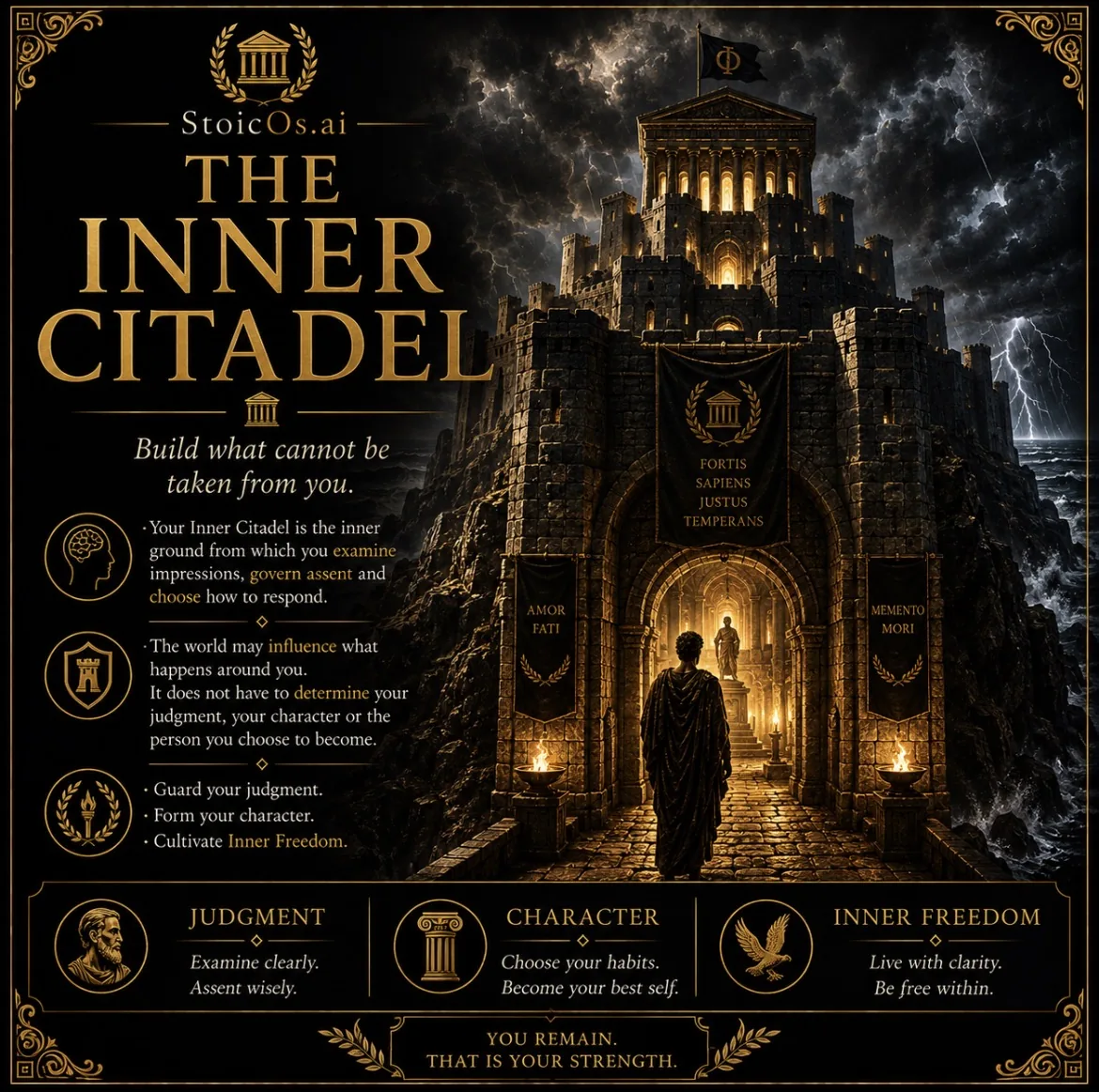
Die innere Zitadelle ist das stoische Bild für den Teil von Ihnen, den kein äußeres Ereignis zwingen kann: das leitende Vermögen — Sitz von Urteil, Zustimmung und Wahl. Marc Aurel schrieb, der von Leidenschaften freie Geist sei eine Festung, “der stärkste Ort, den es gibt, wohin wir uns flüchten können” (Selbstbetrachtungen 8.48). Ist sie gut gebaut, mögen Ereignisse alles um Sie herum treffen; Ihr Urteil erzwingen können sie nicht.
Definition
Den Namen “innere Zitadelle” machte der Gelehrte Pierre Hadot geläufig, dessen Studie über Marc Aurel (La citadelle intérieure, 1992) ihren Titel dem kaiserlichen Bild der Seele als Akropolis entlehnte. Die Lehre hinter dem Bild ist die stoische Auffassung des hēgemonikon, des leitenden Vermögens: Äußeres kann Körper und Besitz erreichen, doch nur die eigene Zustimmung formt die Urteile (Selbstbetrachtungen 5.19; Epiktet, Lehrgespräche 1.1).
Historischer Kontext
Marc Aurel kehrt immer wieder zum Festungsbild zurück: Die Dinge berühren die Seele nicht (4.3); das leitende Vermögen wird unbesiegbar, wenn es sich in sich zurückzieht und mit gerechtem Handeln zufrieden ist (8.48); Schaden existiert nur, wo das Urteil es sagt (4.7). Epiktet lehrte dasselbe als rechten Gebrauch der Eindrücke — das eine Vermögen, das der Tyrann nicht ketten kann. Hadot zeigte, dass dies keine Fluchtmetaphern waren, sondern eine tägliche Disziplin der Aufmerksamkeit.
Was es bedeutet
- Es gibt einen inneren Grund — das Urteil —, den Ereignisse bedrängen, aber ohne Ihre Zustimmung nie besetzen können.
- Stärke wird in Friedenszeiten gebaut: Die tägliche Prüfung der Eindrücke ist das Mauerwerk der Zitadelle.
- Die Zitadelle ist Basis fürs Handeln, kein Versteck: Aus gefestigtem Urteil kommt gerechtes, mutiges Engagement in der Welt.
Was es nicht bedeutet
- Keine Gefühlstaubheit, keine Bunkermentalität — die Zitadelle schützt das Urteil gerade, damit Sie präsent bleiben und gut handeln können.
- Keine Unverwundbarkeit von Körper, Laufbahn oder Ruf: Diese bleiben exponiert; der Anspruch betrifft nur Ihre Urteile.
- Kein antiker Fachbegriff: Die kompakte Formel ist von Hadot; Bild und Lehre sind von Marc Aurel selbst.
Moderne Beispiele
- — Unter öffentlicher Kritik prüft der Zitadellenhalter den Vorwurf in der Sache: Trifft er zu, wird der Kurs korrigiert; trifft er nicht zu, gehört er dem Kritiker — die Fassung stand ohnehin nie zur Abstimmung.
- — Bei plötzlichem Verlust wird die Trauer voll gefühlt, doch das Urteil “mein Leben ist zerstört” wird am Tor geprüft statt durchgewinkt.
Übung: Das Tor bewachen (wann immer ein starkes Gefühl trifft)
- Bemerken Sie den Eindruck und benennen Sie ihn: “Ich habe den Gedanken, dass …”
- Halten Sie ihn am Tor: “Eindruck, warte — lass mich dich prüfen” (nach Epiktet, Lehrgespräche 2.18).
- Fragen Sie, was in der Lage wirklich Ihres ist (Dichotomie der Kontrolle) und was die Tugend jetzt verlangt.
- Stimmen Sie nur der geprüften Fassung zu — und handeln Sie aus ihr.
Im StoicOs-Praxispfad
In der inneren Zitadelle läuft der ganze StoicOs-Pfad zusammen: Die Logik baut ihre Mauern (geprüftes Urteil), die Physik weitet ihren Horizont (Annahme der Natur), die Ethik stellt ihre Besatzung (die vier Tugenden) — und Innere Freiheit ist das Leben, das von innen heraus gelebt wird.
Vertiefen
Quellen
- Marcus Aurelius, Meditations 4.3; 4.7; 5.19; 8.48
- Epictetus, Discourses 1.1; 2.18
- Pierre Hadot, The Inner Citadel (1992; Eng. 1998) — origin of the modern phrase