Stoisches Konzept · StoicOs-Karte 001
Die Dichotomie der Kontrolle
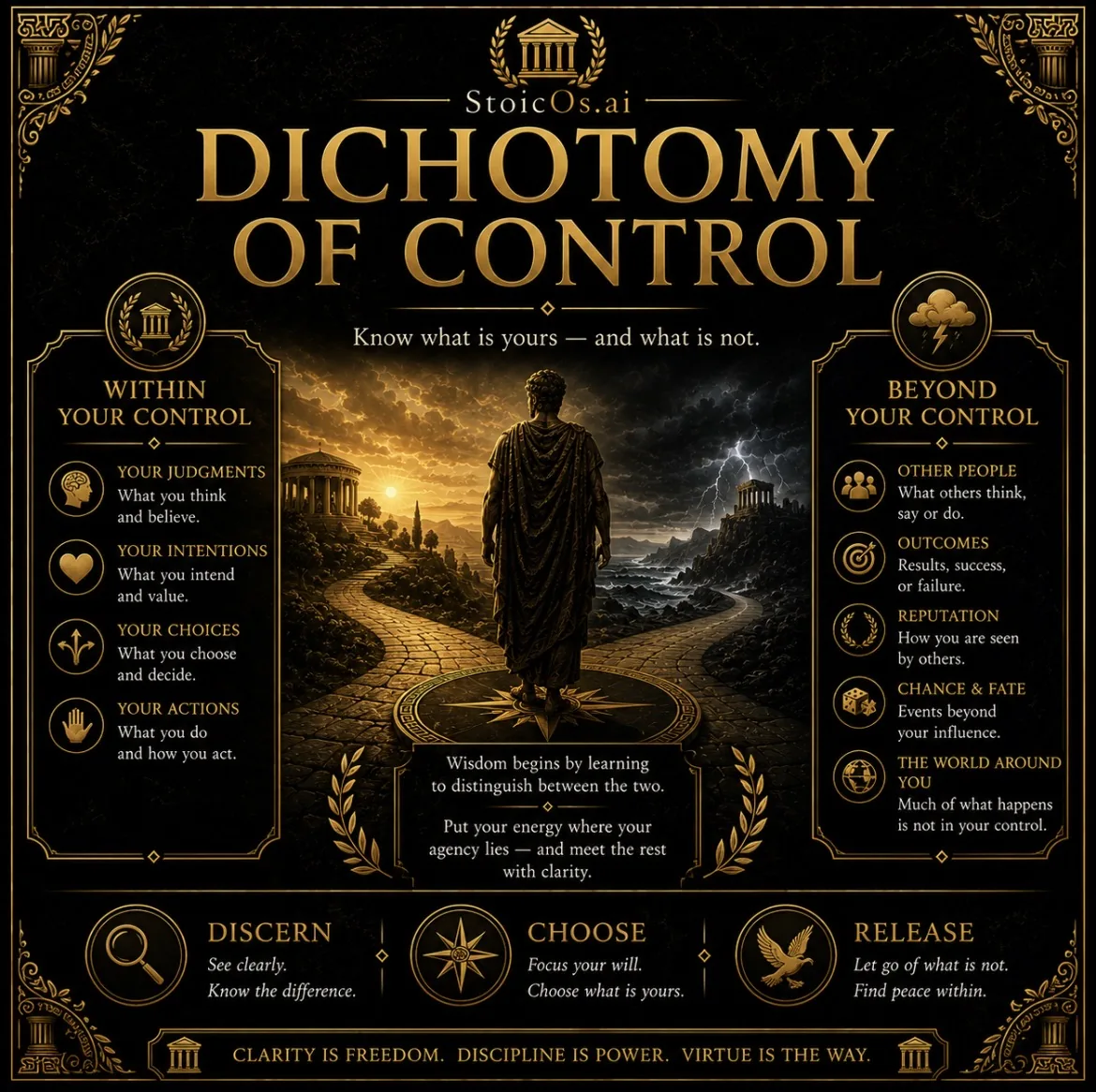
Die Dichotomie der Kontrolle ist die stoische Unterscheidung zwischen dem, was an Ihnen liegt, und dem, was nicht. An Ihnen: Ihre Urteile, Absichten, Entscheidungen und Handlungen. Nicht an Ihnen: andere Menschen, Ergebnisse, Ruf, Zufall und das meiste, was geschieht. Für die Stoiker beginnen Gelassenheit und guter Charakter damit, beides zu unterscheiden — und die Kraft dorthin zu lenken, wo die eigene Handlungsmacht wirklich liegt.
Definition
Epiktet eröffnet damit das Encheiridion: “Einiges steht in unserer Macht, anderes nicht. In unserer Macht stehen Urteil, Streben, Begehren und Abneigung — kurz, alles, was unser eigenes Tun ist; nicht in unserer Macht stehen Körper, Besitz, Ruf und Amt” (Encheiridion 1). Der moderne Name “Dichotomie der Kontrolle” ist ein zeitgenössisches Etikett — popularisiert durch den Philosophen William B. Irvine — für diese antike Unterscheidung; die Stoiker sprachen von dem, was “an uns liegt” (eph' hēmin).
Historischer Kontext
Die Unterscheidung durchzieht die ganze Stoa. Epiktet, als Sklave geboren, machte sie zur ersten Lektion seiner Lehre (Encheiridion 1; Lehrgespräche 1.1). Marc Aurel kehrt in seinen Selbstbetrachtungen ständig zu ihr zurück: Äußere Ereignisse können das leitende Vermögen nicht berühren, wenn das Urteil sie nicht einlässt (4.3; 8.47). Seneca wendet sie auf das Schicksal an: Der Weise betrachtet alles Äußere als geliehen, nicht als Besitz (Briefe 72; De Providentia).
Was es bedeutet
- Ihre Urteile, Absichten, Entscheidungen und Handlungen sind das Einzige, was ganz Ihnen gehört — dort wohnen Verantwortung und Freiheit.
- Äußeres — Gesundheit, Wohlstand, Ruf, das Verhalten anderer, Ergebnisse — lässt sich bearbeiten und pflegen, aber nie garantieren.
- Kraft, die im Protest gegen das Unverfügbare aufgeht, fehlt an dem einzigen Ort, den Sie wirklich regieren.
- Ruhe ist keine Gleichgültigkeit gegenüber der Welt; sie ist Klarheit darüber, wo die eigene Handlungsmacht beginnt und endet.
Was es nicht bedeutet
- Sie bedeutet keine Passivität. Stoiker regierten, erzogen Familien und kämpften gegen Unrecht — und hielten das Ergebnis dabei locker.
- Sie bedeutet nicht, dass nichts beeinflussbar wäre. Vieles reagiert auf Anstrengung; der Punkt ist: Einfluss ist keine Kontrolle.
- Sie ist keine Gefühlsunterdrückung. Sie richtet die Sorge neu aus — auf das, was Ihre Entscheidungen wirklich erreichen können.
Moderne Beispiele
- — Ein Vorstellungsgespräch: Vorbereitung, Ehrlichkeit und Fassung sind Ihre Sache; die Einstellungsentscheidung nicht.
- — Ein schwieriger Kollege: Ihr Ton, Ihre Grenzen und Ihre Fairness gehören Ihnen; sein Verhalten nicht.
- — Eine Diagnose: Behandlungsentscheidungen, Haltung und der heutige Tag gehören Ihnen; die Prognose nicht.
Übung: Die Zwei-Spalten-Prüfung (5 Minuten)
- Nehmen Sie eine Situation, die Sie gerade beunruhigt, und schreiben Sie sie in einem Satz auf.
- Ziehen Sie zwei Spalten: “meins” und “nicht meins”. Ordnen Sie jedes Element ehrlich zu.
- Schreiben Sie zur Spalte “nicht meins” einen Satz der Annahme: “Dies kann geschehen; ich werde ihm mit Klarheit begegnen.”
- Wählen Sie aus der Spalte “meins” eine konkrete Handlung und führen Sie sie heute aus.
Im StoicOs-Praxispfad
Im StoicOs-Praxispfad beginnt hier die Logik: Sie trainiert den ersten Akt des Urteilens — zu unterscheiden, worum es bei einem Eindruck wirklich geht — vor Zustimmung, Wahl und Handlung. Über die Zeit geübt, verfestigt sich diese Unterscheidung zu Charakter, und Charakter zu innerer Freiheit.
Vertiefen
Häufige Fragen
Ist die Dichotomie der Kontrolle dasselbe wie 'Loslassen'?
Nicht ganz. Loslassen wird oft als Ablösung von allem verstanden. Die Dichotomie der Kontrolle ist präziser: Sie bittet Sie, nur das freizugeben, was nie Ihres war — Ergebnisse, Meinungen, Zufall —, um volles Eigentum an dem zu übernehmen, was Ihres ist: Urteil, Absicht, Wahl und Handlung.
Sagten die Stoiker wirklich 'Dichotomie der Kontrolle'?
Nein — der Ausdruck ist modern (popularisiert von William B. Irvine). Die antike Formulierung ist Epiktets Eröffnung des Encheiridion: Einiges liegt an uns, anderes nicht. Die Idee ist antik; das Etikett zeitgenössisch.
Quellen
- Epictetus, Enchiridion 1; Discourses 1.1
- Marcus Aurelius, Meditations 4.3; 8.47
- Seneca, Letters to Lucilius 72; De Providentia
- William B. Irvine, A Guide to the Good Life (2009) — origin of the modern phrase