SVF I.1–46
Das Leben Zenons
Was wir über Zenon von Kition wissen, stammt nicht aus einer zu seinen Lebzeiten verfassten Biographie. Sein Leben muss aus späteren antiken Zeugnissen rekonstruiert werden — vor allem Diogenes Laertios, Buch 7 —, gesammelt als Fragmente 1–46 der Stoicorum Veterum Fragmenta. Diese Vita präsentiert jene Zeugnisse als eine fortlaufende Erzählung und bewahrt dabei den Unterschied zwischen historischem Beleg, antikem Bericht und anekdotischer Tradition. Jeder Abschnitt ist in seinen Quellen verankert.
Herkunft und Familie
Zenon stammte aus Kition auf Zypern, einer Hafenstadt mit starkem phönizischem Element; Diogenes Laertios eröffnet seine Vita mit dieser Herkunft und nennt seinen Vater Mnaseas (Philon gibt denselben Namen). Seine Geburt wird üblicherweise um 334 v.Chr. angesetzt — eine moderne Rückrechnung aus den widersprüchlichen antiken Lebensdauerangaben, kein antikes Datum. Dass er kein Grieche alten Stammes war, blieb im Gedächtnis: Cicero kann ihn noch als Fremden (advena) aus Kition einführen.
Ankunft in Athen
Die antike Tradition berichtet, Zenon sei nach einem Schiffbruch nach Athen gekommen: Mit Purpur handelnd verlor er seine Ladung, geriet in eine Buchhandlung, hörte Xenophons Erinnerungen an Sokrates vorlesen und fragte, wo solche Männer zu finden seien — worauf zufällig der Kyniker Krates vorbeikam. Diogenes bewahrt dies als Erzählung, daneben ein Orakel, Zenon solle 'die Farbe der Toten annehmen', d.h. der alten Autoren. Sein Alter bei der Ankunft ist in den Quellen selbst strittig: Persaios, sein eigener Schüler, sagt zweiundzwanzig; andere dreißig. Der Schiffbruch lässt sich nicht verifizieren; dass sich ein junger kitischer Kaufmannssohn um 312 v.Chr. in Athen der Philosophie zuwandte, ist der gemeinsame Kern.
Lehrer und Bildung
Zenons philosophische Bildung ist vergleichsweise gut bezeugt. Er schloss sich zuerst Krates dem Kyniker an; die Tradition nennt auch Stilpon den Megariker, die Dialektiker Diodoros und Philon sowie die Akademiker Xenokrates und Polemon. Cicero bestätigt unabhängig, dass Zenon bei Polemon studierte. Diese Breite hinterließ Spuren: Kynische Ethik, megarische Logik und akademischer Systembau fließen alle in die Schule ein, die er später gründete. Anekdoten über Krates — etwa die Linsensuppen-Geschichte, erzählt, um Zenons Schamgefühl zu heilen — gehören zur anekdotischen Schicht dieser Tradition.
Verwandte Lehre
Die Bemalte Halle und die Schule
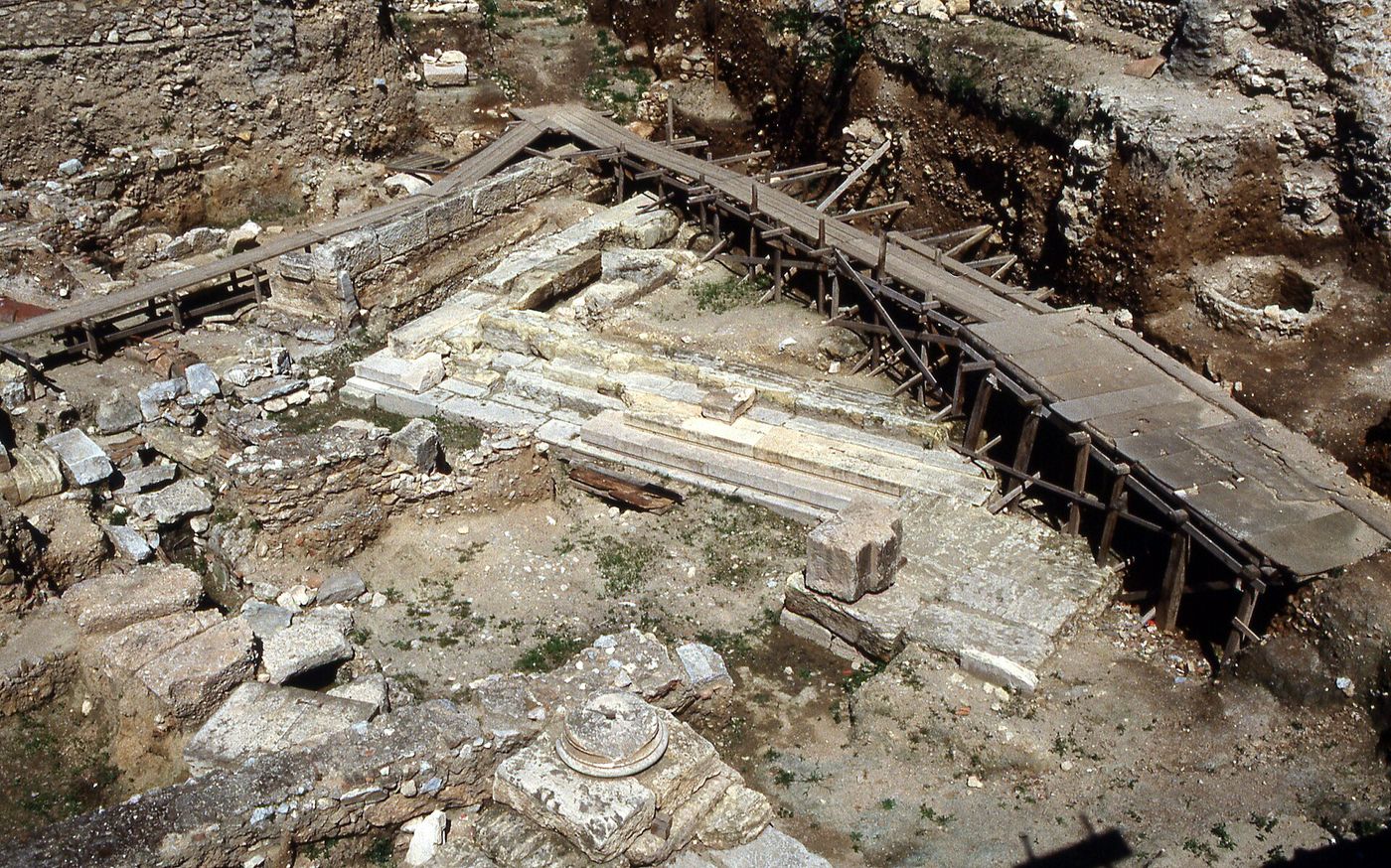
Nach seinen Studienjahren begann Zenon in der Stoa Poikile zu lehren, der Bemalten Halle an der Nordseite der Athener Agora — gewählt, so berichtet Diogenes, weil er wollte, dass der Ort, einst durch die Hinrichtungen unter den Dreißig befleckt, durch Philosophie gereinigt werde. Vom Gebäude kam der Name: Die sich dort versammelten, zuerst Zenonianer genannt, wurden als Stoiker bekannt. Der Ort selbst ist ein Fixpunkt der Tradition, und seine Reste sind durch die Agora-Grabungen identifiziert.
ARCHÄOLOGISCHE STÄTTE
Die Stoa Poikile (Bemalte Halle), Westende
Ausgegrabene Reste — keine moderne Rekonstruktion — der Säulenhalle an der Nordseite der Athener Agora, in der Zenon lehrte. Die stoische Schule verdankt diesem Gebäude ihren Namen.
- Datierung
- Gebäude: ca. 475–450 v.Chr.; Foto: 1991
- Fundort
- Athen, Agora-Grabungen nördlich der Adrianou-Straße
- Sammlung
- In situ, Athener Agora, Athen
- Bezug zu Zenon
- Zenon lehrte in dieser Stoa (Diogenes Laertios 7.5); seine Anhänger wurden deshalb Stoiker genannt.
- Identifizierung
- Hoch — die Identifizierung dieser Reste als Stoa Poikile ist durch die Agora-Grabungen gesichert.
- Quelle
- American School of Classical Studies at Athens, Agora-Grabungen; Foto via Wikimedia Commons
- Bildrechte
- Photo: Mark Landon, 1991, CC BY 4.0 (Wikimedia Commons)
Charakter und Lebensweise
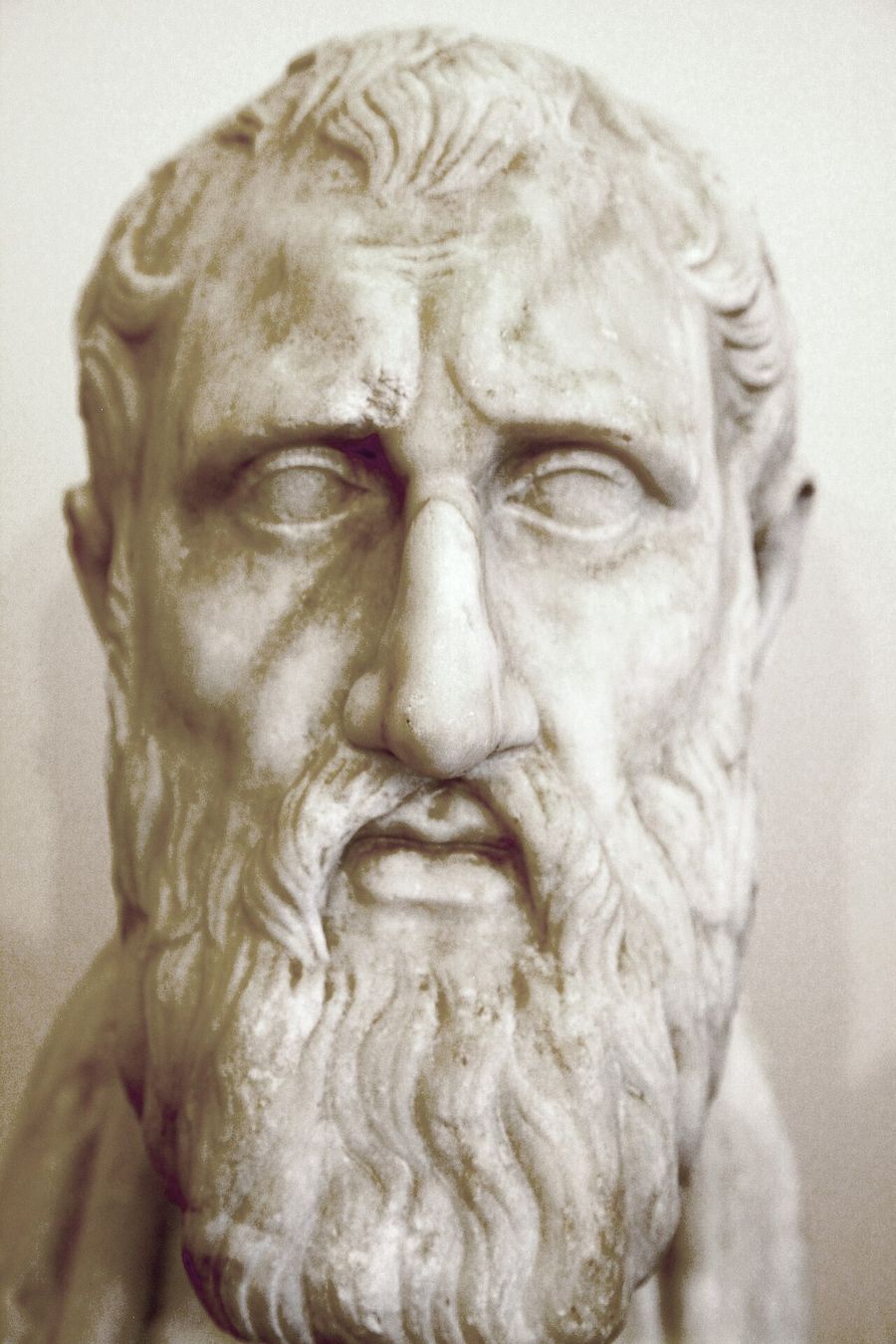
Die Tradition zeichnet ein konsistentes Porträt: hager, streng, sparsam, wortkarg — von Brot, Honig und wenig Wein lebend, Menschenmengen und Gepränge meidend. Athen machte seine Mäßigung zum Sprichwort: 'beherrschter als der Philosoph Zenon'. Einzelne Szenen — sein Umgang mit einem reichen Angeber aus Rhodos oder mit jungen Männern, deren Neugier ihrem Ernst vorauslief — sind Anekdoten: Jede beweist weniger als Biographie denn als Zeugnis des Charakters, den die Antike ihm zuschrieb. Die zerfurchten, strengen Züge des antiken Porträttypus vermitteln dasselbe Bild in Marmor.
Verwandte Lehre
ANTIKER PORTRÄTTYPUS · ALS ZENON IDENTIFIZIERT
Hermenporträt des Zenon von Kition
Römische Marmorkopie nach einem hellenistischen Porträttypus des frühen 3. Jahrhunderts v.Chr. — kein zu Zenons Lebzeiten geschaffenes Porträt. Die hageren, zerfurchten Züge wurden in der Antike zum Standardbild des Gründers der Stoa.
- Datierung
- Römische Kopie; Porträttypus entstanden im frühen 3. Jahrhundert v.Chr.
- Fundort
- Fundort nicht dokumentiert; ehemals Sammlung Farnese, Rom
- Sammlung
- Museo Archeologico Nazionale, Neapel (Sammlung Farnese)
- Inventarnummer
- inv. 6128
- Bezug zu Zenon
- Der Porträttypus, der in der Forschung als Zenon von Kition, Gründer der stoischen Schule, identifiziert wird.
- Identifizierung
- Hoch — die Identifizierung des Typus beruht auf beschrifteten Hermenkopien und ist in der Forschung allgemein anerkannt.
- Quelle
- Museo Archeologico Nazionale di Napoli; Foto via Wikimedia Commons
- Bildrechte
- Photo: Jeremy Weate, CC BY 2.0 (Wikimedia Commons)
Spott und Kritik
Nicht die ganze Tradition ist freundlich, und die feindlichen Stimmen sind selbst Zeugnisse. Der Satiriker Timon von Phleius verspottete Zenon in seinen Silloi, höhnend über das Aussehen des Phöniziers und seinen Eifer, Anhänger zu sammeln; Cicero, gegen stoische Positionen argumentierend, kann ihn einen bloßen Fremden und Wortkünstler nennen. Solche Passagen sind als Polemik zu lesen, nicht als Beschreibung — doch sie bestätigen von der Gegenseite, dass der Außenseiter aus Kition in Athen nicht mehr zu übersehen war.
Könige, Athen und öffentliche Ehre
Diogenes berichtet, König Antigonos Gonatas von Makedonien habe Zenons Vorlesungen besucht, wenn er in Athen war, und ihn an seinen Hof eingeladen; Zenon, sein Alter vorschützend, sandte stattdessen seine Schüler Persaios und Philonides. Diogenes zitiert sogar einen Briefwechsel, entnommen dem Apollonios von Tyros — der Wortlaut ist nur hier erhalten, und antike Philosophenbriefe sind häufig spätere Kompositionen. Athen selbst ehrte den Fremden: Diogenes überliefert das Dekret, das Zenon einen goldenen Kranz und ein öffentliches Grab im Kerameikos zusprach, weil er sein Leben, in Übereinstimmung mit seiner Lehre, der Jugend zum Vorbild gemacht habe. Der Dekrettext ist ein zitiertes Dokument bei einem einzigen antiken Autor; sein Gehalt — öffentliche Ehre für einen Metöken-Philosophen — passt zum bezeugten Ansehen, das er genoss.
Alter und Tod
Die Quellen widersprechen sich über Zenons Lebensdauer. Diogenes verzeichnet beide Traditionen: Sein Schüler Persaios gibt zweiundsiebzig Jahre; eine andere Tradition — der Lukian folgt, mit dem Zusatz, er sei nie krank gewesen — macht ihn achtundneunzig. Die moderne Chronologie, vom Ankunftsdatum ausgehend, bevorzugt meist die niedrigere Zahl (gestorben ca. 262 v.Chr.), doch der Widerspruch steht im Befund und lässt sich daraus nicht auflösen. Der Tod selbst wird als Szene erzählt: Beim Verlassen der Schule stolperte er und brach eine Zehe, schlug mit der Hand auf die Erde, sprach den Vers aus der Niobe — 'ich komme; was rufst du mich?' — und starb bald darauf, in einer Version durch Anhalten des Atems. Die Inszenierung ist typisch für antike Philosophen-Sterbeerzählungen; ihre Historizität lässt sich nicht sichern.
Verwandte Lehre
Schriften, Erinnerung und Nachwirkung
Zenon schrieb viel, doch nichts ist vollständig erhalten: Diogenes bewahrt einen Katalog, der neben der berüchtigten Politeia Abhandlungen nennt über das Leben gemäß der Natur, über den Antrieb, über die Leidenschaften, über das Zukommende (kathēkon), über das Gesetz, über griechische Erziehung, über das Sehen, über das All, über Zeichen, pythagoreische Fragen, Universalien, Ausdrücke, homerische Probleme und mehr. Sein Nachleben war doppelt: eine Schule, die ihn um fünf Jahrhunderte überlebte, und ein Name, der zum Inbegriff einer Lebensweise wurde. Spätere Römer konnten die Herkunft des Neulings herabsetzen, doch Cicero behandelt ihn als Gründer einer großen Tradition, und Quintilian zählt ihn zu den Philosophen, deren Autorität die Bildung nicht übergehen kann. Die in dieser Bibliothek versammelten Fragmente sind, was die Zeit von diesem Werk übrig ließ.